Local SEO is all about making your business visible to people who are searching for services or products online available in your area.
It ensures that your business appears when potential customers are searching for exactly what you offer, right in their own neighborhood or city.
Whether you’re a small business owner or managing a multi-location enterprise, if your business isn’t showing up in local search results, you’re missing out on valuable leads.
In this guide, we’ll break down everything you need to know about local SEO, including the most effective strategies, common mistakes to avoid, and how to measure your success. Let’s dive in!
Why Local SEO Matters
Someone who has Googled something like “best family lawyer near me” or “top-rated plumber in Denver” has used local search.
With local SEO, you can ensure that, when someone needs your services, your business is the one they find first. This is your chance to stand out in a crowded market and connect with customers who are actively seeking what you offer.
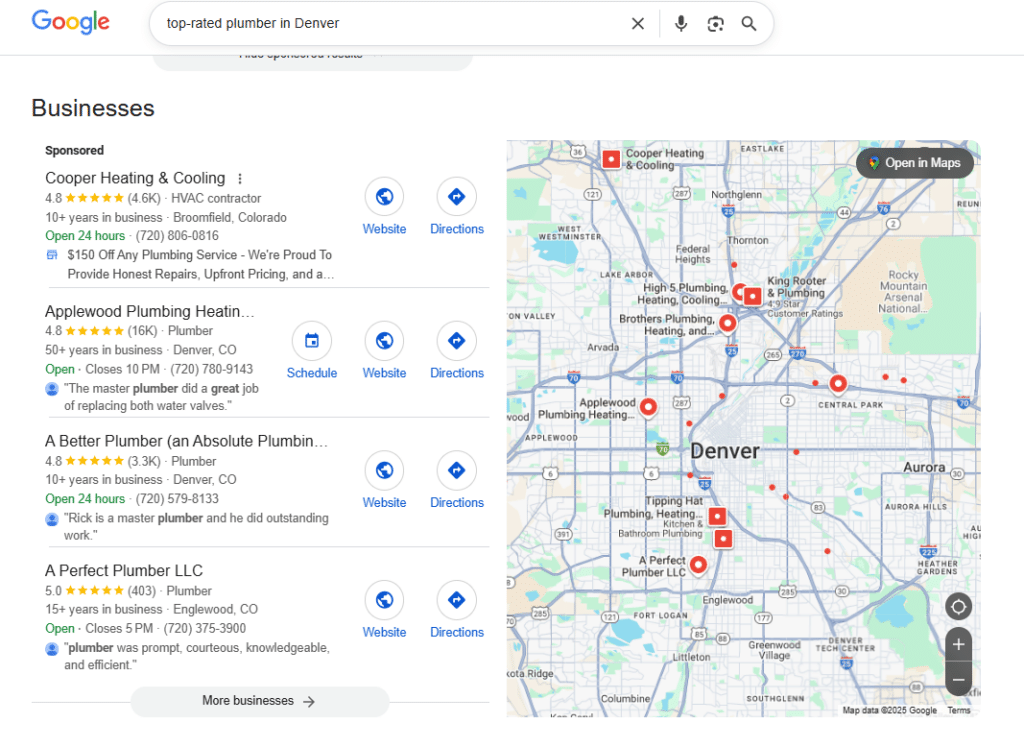
This could mean appearing in the Google Local Pack (those top three businesses that show up on the map) or ranking in organic search results. Here’s what the Local Pack looks like:
In today’s digital-first world, local SEO has become an essential strategy for businesses that want to stay competitive and relevant. Did you know that, according to BrightLocal, 80% of U.S. consumers search for local companies online weekly? Or that booking.com makes over 75% of its revenue through organic search results?
These facts support the conclusion that your local search visibility directly translates into immediate revenue. Here’s why mastering local SEO is non-negotiable:
-
- Local Search Drives Immediate Action: When people search for businesses near them, they’re highly motivated and ready to act. These searches include immediate, high-urgency needs, such as a homeowner searching for a plumber to fix a water leak, as well as searches for complex services, such as finding attorneys to draft a will. Regardless of the decision’s timeline, a local search is a strong indicator of purchasing intent, as many of these queries translate directly into real-world appointments, phone calls, or sales.
- Local Search Drives Immediate Action: When people search for businesses near them, they’re highly motivated and ready to act. These searches include immediate, high-urgency needs, such as a homeowner searching for a plumber to fix a water leak, as well as searches for complex services, such as finding attorneys to draft a will. Regardless of the decision’s timeline, a local search is a strong indicator of purchasing intent, as many of these queries translate directly into real-world appointments, phone calls, or sales.
-
- More Mobile Searches: With mobile devices becoming the primary tool for search, people are increasingly turning to their phones to find businesses nearby. Mobile local search has grown tremendously, meaning you must be ready to show up when potential customers are searching on the go.
- More Mobile Searches: With mobile devices becoming the primary tool for search, people are increasingly turning to their phones to find businesses nearby. Mobile local search has grown tremendously, meaning you must be ready to show up when potential customers are searching on the go.
-
- Customer Convenience: More than ever, consumers want instant answers. When your business shows up in local search results, it provides them with the convenience of finding what they need without having to look elsewhere. This drives more traffic, higher engagement, and ultimately, more sales.
- Customer Convenience: More than ever, consumers want instant answers. When your business shows up in local search results, it provides them with the convenience of finding what they need without having to look elsewhere. This drives more traffic, higher engagement, and ultimately, more sales.
-
- Building Trust with Local Customers: Appearing in local search results also builds trust. When a customer sees your business on the Google Local Pack or in organic search, it signals credibility and relevance. It makes it easier for them to choose you over a competitor that’s not visible in search.
The truth is simple: Local SEO isn’t just a nice-to-have; it’s an essential front of digital marketing for growing your business in the digital age. With consumers turning to the web to find businesses in their area, it ensures that when they do, your business is at the forefront.
Why the Focus on Google?
You may wonder why our focus remains exclusively on Google, given that other search engines like Bing and DuckDuckGo exist. The reason is simple: market and mind share.
As of 2026, Google still commands almost 90% of all global search traffic. By working on local SEO with a Google-first focus and ensuring placement in the Local Pack, you are directing your resources where the vast majority of your potential customers are already searching.
The Core Components of Local SEO
To rank well in local search results, there are key components you need to focus on. These elements not only help Google and other search engines understand your business but also feed information to emerging AI and Large Language Model (LLM) searches.
Let’s dive into the core components that form the foundation of an effective strategy.
Google Business Profile
Google Business Profile (GBP) is the central engine for your business’s presence and ranking on Google. A complete and optimized GBP is the single most important factor that determines if you will show up first in local search results, like the coveted 3-Pack, when customers look for services in your area.
Maintaining an accurate and robust GBP is critical to ensure you appear prominently and attract high-intent customers.
What You Can Find on Your Business Profile:
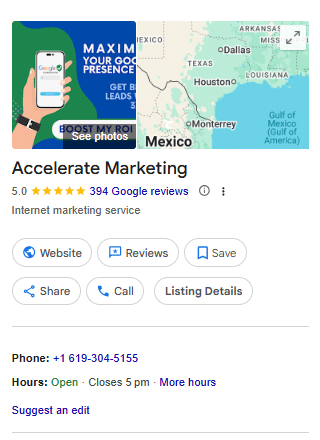
- Business Information: This includes your business name, address, phone number, hours of operation, website link, and more. Keeping this information accurate is crucial for both search rankings and customer trust.
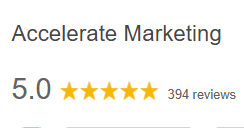
- Customer Reviews: Your GBP showcases reviews from customers who have interacted with your business. Positive reviews not only help your rankings but also build trust with potential customers.
-
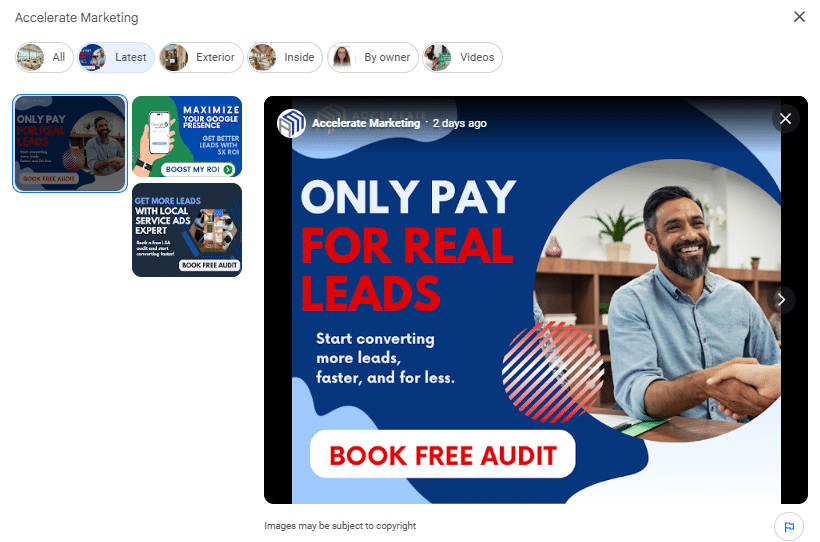
- Photos and Videos: Visual content on your profile, such as photos of your business, products, or services, is one of the most effective ways to engage customers and showcase what you offer.
- Photos and Videos: Visual content on your profile, such as photos of your business, products, or services, is one of the most effective ways to engage customers and showcase what you offer.
-
- Google Posts: You can share special offers, events, or updates through posts on your GBP. These appear directly in search results and can encourage users to take immediate action.
- Google Posts: You can share special offers, events, or updates through posts on your GBP. These appear directly in search results and can encourage users to take immediate action.
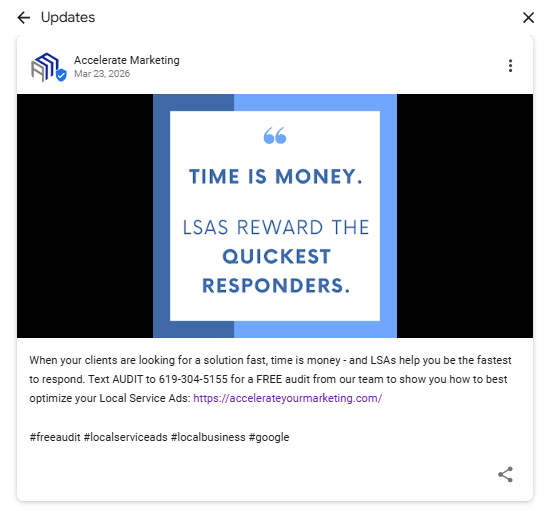
-
- Insights: GBP provides valuable data about how customers are finding your business, including the types of searches, the search queries they are using, and how they are interacting with your profile.
- Insights: GBP provides valuable data about how customers are finding your business, including the types of searches, the search queries they are using, and how they are interacting with your profile.
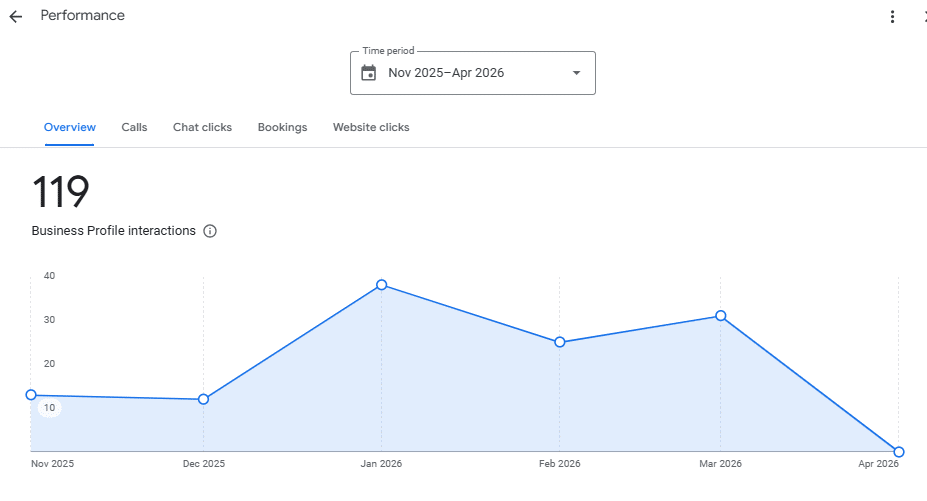
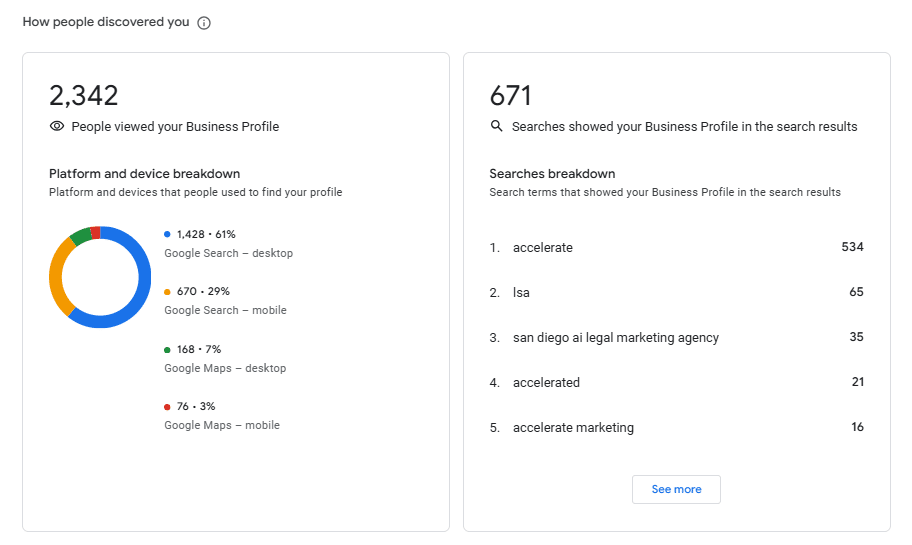
A fully-completed GBP not only helps your local SEO but also makes it easier for potential customers to contact you, leave reviews, and learn more about your business, all of which drive higher engagement and visibility.
Local Citations & NAP Consistency
Local citations are online mentions of your business on various directories, review sites, and social platforms. These citations help search engines verify your business information and improve your visibility in local search results.
NAP (Name, Address, Phone number) consistency is crucial; Google needs to see the same details across all platforms to trust that your business is legitimate.
Why NAP Consistency Matters:
-
- Inconsistent NAP information can confuse both search engines and potential customers.
- Inconsistent NAP information can confuse both search engines and potential customers.
-
- Having the correct and consistent NAP (Name, Address, Phone) on directories like Yelp, Yellow Pages, and other local listings is essential for ranking higher in local search.
- Having the correct and consistent NAP (Name, Address, Phone) on directories like Yelp, Yellow Pages, and other local listings is essential for ranking higher in local search.
Note that there are instances where your phone numbers might not be the same, for example, if you’ve hired a call tracking service. While call tracking does not hurt SEO, it is important to avoid mistakes.
For example, if you’re using call tracking for your GBP, you must use your business’s original phone number as the secondary one, and the tracking number as the main one, to avoid inconsistent NAP issues.
To ensure your business is accurately represented across the web, monitor your local citations and overall NAP consistency. Use tools like Moz Local or Yext to track where your business is listed and whether your Name, Address, and Phone number are consistent across all platforms.
The Role of AI and LLMs in Data Verification
In today’s landscape, this consistency is more important than ever due to the rise of Artificial Intelligence (AI) and Large Language Models (LLMs).
1. AI as a Fact Checker: When a user asks an LLM (like a conversational search agent) a query like “Who is the best plumber near me?”, the AI doesn’t just look at one website. It quickly “reads” across hundreds of sources (your citations, reviews, social media, and directories) to synthesize an answer.
2. The Consistency Requirement: For the AI to confidently recommend your business or feature you in its summary, the NAP data it collects must be unified and identical. If it finds discrepancies, even minor ones, like “Street” vs. “St.”, the AI may not be able to confirm your business is a single, trustworthy entity.
3. Risk of Exclusion: Inconsistent data signals low trustworthiness, making your business less likely to be cited in an AI-generated answer. This means you risk being entirely excluded from the immediate, zero-click recommendations that dominate the future of local search.
Therefore, maintaining strict NAP consistency is now the foundation for both traditional Local SEO algorithms and the new era of AI-powered local search optimization.
Local Keywords
Targeting local keywords is an essential part of local SEO. While “keywords” is the technical term, these are essentially the phrases and questions that real users type into the search bar when looking for a nearby solution or service.
These are search terms that include location-specific keywords, such as your city or neighborhood, combined with your services. For example, if you own a plumbing business in Miami, local keywords might include “drain cleaning in Miami” or “emergency plumbing Miami.”
How to Use Local Keywords:
-
- Incorporate local keywords in your website’s title tags, meta descriptions, and header tags.
- Incorporate local keywords in your website’s title tags, meta descriptions, and header tags.
-
- Use them in your content: Write blog posts, service pages, or location-specific landing pages that target local keywords.
- Use them in your content: Write blog posts, service pages, or location-specific landing pages that target local keywords.
-
- Include local keywords in your Google Business Profile and other platforms where your business appears. Focus on accuracy, not volume. Keep your business name, address, and primary service within Google’s rules, avoiding any phrasing that suggests keyword stuffing. Include local keywords naturally and properly within posts, FAQs, and other content sections. Here’s an example of how this could look:
- Include local keywords in your Google Business Profile and other platforms where your business appears. Focus on accuracy, not volume. Keep your business name, address, and primary service within Google’s rules, avoiding any phrasing that suggests keyword stuffing. Include local keywords naturally and properly within posts, FAQs, and other content sections. Here’s an example of how this could look:
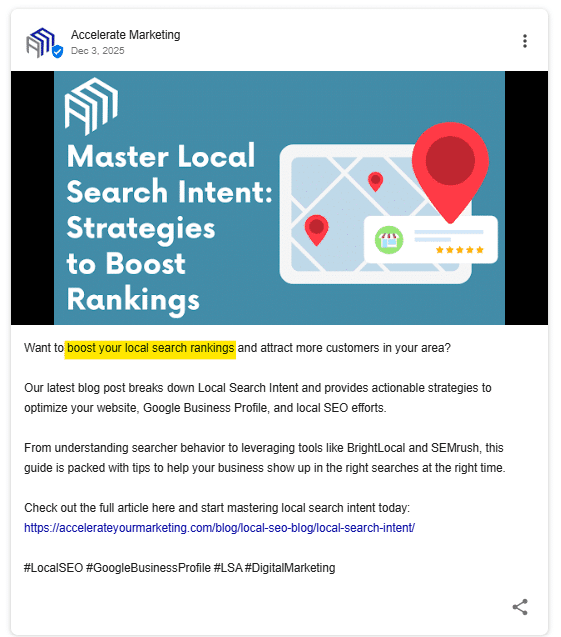
By using local keywords, you ensure that search engines know exactly what services you offer and where you offer them, making it easier for local customers to find you.
Technical & On-Page SEO for Local Optimization
On-page SEO refers to the content and elements on your website that are optimized for search engines.
These elements are important because machines interpret the content of a website differently than humans do; while we use our eyes to read and navigate a page easily, search engines rely on code and specific tags to understand context and relevance.
For local SEO, this includes making sure that local keywords are included in the right places on your website, such as the title tag, headers, and content. It also involves optimizing your website’s structure to make it user-friendly and easy to navigate.
How to Optimize Your Website for Local SEO:
-
- Structure Internal Links with Local Relevance: Use your internal linking strategy to reinforce geographical authority. On your main service page, use anchor text that clearly links to your specific city or neighborhood landing pages (e.g., linking from your main “Plumbing Services” page to the “Miami Drain Cleaning” page). This strengthens the connection between your main site and your localized content for search engines.
- Structure Internal Links with Local Relevance: Use your internal linking strategy to reinforce geographical authority. On your main service page, use anchor text that clearly links to your specific city or neighborhood landing pages (e.g., linking from your main “Plumbing Services” page to the “Miami Drain Cleaning” page). This strengthens the connection between your main site and your localized content for search engines.
-
- Ensure your site is mobile-friendly: Many local searches happen on mobile devices, so a mobile-optimized site is a must.
- Ensure your site is mobile-friendly: Many local searches happen on mobile devices, so a mobile-optimized site is a must.
-
- Improve user experience: Make your website easy to navigate, load quickly, and have clear calls to action.
- Improve user experience: Make your website easy to navigate, load quickly, and have clear calls to action.
Optimizing these elements will help your website rank higher in local search results and provide a better experience for your visitors.
Technical SEO for Local Rankings
While optimizing your business’s online presence with on-page elements is essential, technical SEO is equally important for boosting your local rankings.
Technical SEO ensures that search engines can easily crawl, understand, and index your website, which helps improve your visibility in local search results. Let’s dive into the key technical SEO elements that can make a big difference for local businesses.
1. Mobile Optimization:
With the majority of local searches happening on mobile devices, mobile optimization is more important than ever.
Google uses mobile-first indexing, meaning that the mobile version of your website is considered the primary version for ranking purposes. If your site isn’t optimized for mobile, it can significantly hurt your chances of ranking in local search results.
How to Optimize for Mobile:
✔ Responsive Design: Ensure your website is set to fit any screen size, from smartphones to tablets.
✔ Mobile-Friendly Navigation: Ensure your website is easy to navigate on mobile, with clear buttons and a user-friendly layout.
2.Page Speed:
The world moves fast, and the digital landscape is no different. With users expecting immediate results, page speed is crucial. Google takes this factor into account when ranking websites, and slow-loading pages can negatively affect your local SEO.
If your site takes more than a few seconds to load, potential customers may simply go back to search for other options, which can also increase your bounce rate, a metric that Google considers when determining site quality.
How to Improve Page Speed:
✔ Compress images and videos: Large files can slow down your site. Use tools to compress and optimize media files.
✔ Minimize HTTP requests: Reducing the number of elements (like images, scripts, and fonts) on a page can speed up load times.
✔ Optimize your WordPress environment: Outdated code can cause conflicts and slow down performance; ensure you are running the latest versions. Keep these tips in mind:
-
-
-
-
-
-
- Clean your database: Use a plugin to regularly remove old post revisions, trashed comments, and expired transients that clutter your database.
- Audit your plugins: Deactivate and delete any plugins you aren’t using, as each active plugin adds weight to your site’s load time.
- Clean your database: Use a plugin to regularly remove old post revisions, trashed comments, and expired transients that clutter your database.
-
-
-
-
-
3.Structured Data and Local SEO:
Structured data, also known as schema markup, is a form of code added to your website that helps search engines understand the content on your page more clearly.
For local SEO, LocalBusiness schema is particularly important because it provides search engines with detailed information about your business, such as your address, phone number, business type, and operating hours.
How to Implement Structured Data:
✔ Use the LocalBusiness schema: Add schema markup to your business’s name, address, phone number, opening hours, and other relevant details.
✔ Be Selective with Your Schema: You do not need to add the LocalBusiness schema to every single page on your site. Focus your implementation on the most relevant high-value pages, such as your Homepage, Contact Us page, and specific Location Landing Pages.
✔ Validate your markup: Never assume your code is perfect. Use official tools like Google’s Rich Results Test and the Schema Markup Validator to ensure your structured data is correctly implemented and error-free before you go live.
Can Link Building Power Your Local SEO Strategy?
The answer is simple, but strong: Yes, it can. Building local backlinks is a crucial part of any local SEO strategy.
Backlinks from reputable, locally relevant websites signal to search engines that your business is trusted and relevant in your community. These links help boost your website’s authority, which, in turn, improves your local search rankings.

Additionally, backlinks from local sources are more likely to drive traffic from your target audience; people who live or work near your business and are searching for your services. Here are a few effective strategies for acquiring local backlinks:
-
- Build a Local Network: Collaborate with complementary local businesses to earn backlinks through promotions or joint offers.
- Build a Local Network: Collaborate with complementary local businesses to earn backlinks through promotions or joint offers.
-
- Sponsor Local Events or Charities: Sponsor events or charities to get featured on local sites and ask for backlinks in return.
- Sponsor Local Events or Charities: Sponsor events or charities to get featured on local sites and ask for backlinks in return.
-
- Collaborate with Local Influencers or Bloggers: Partner with local influencers or bloggers to offer a product/service for review in exchange for a backlink.
- Collaborate with Local Influencers or Bloggers: Partner with local influencers or bloggers to offer a product/service for review in exchange for a backlink.
-
- Get Listed in Local Directories: Ensure your business is listed in reputable local directories like chambers of commerce and industry-specific sites.
- Get Listed in Local Directories: Ensure your business is listed in reputable local directories like chambers of commerce and industry-specific sites.
-
- Write Guest Posts on Local Blogs: Offer to write guest posts on local blogs, including a link back to your website.
- Write Guest Posts on Local Blogs: Offer to write guest posts on local blogs, including a link back to your website.
-
- Local Press Coverage: Get featured in local media outlets (newspapers, magazines, online publications) to generate high-quality local backlinks.
- Local Press Coverage: Get featured in local media outlets (newspapers, magazines, online publications) to generate high-quality local backlinks.
How to Monitor Your Local SEO Results
Once you’ve got a managed local SEO service in place, it’s important to track your progress and measure the success of your efforts.
Monitoring your results will help you identify what’s working, where improvements are needed, and what adjustments to make moving forward. Take a look at how you can do it:
1. Using Google Analytics
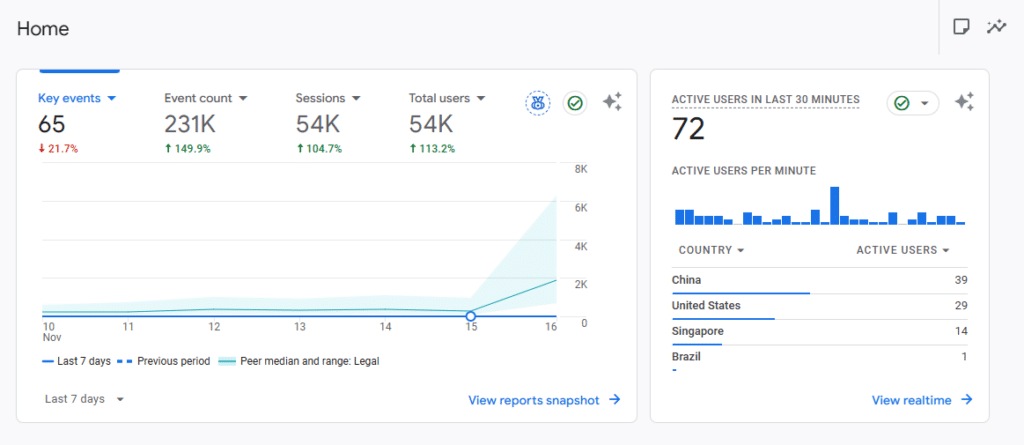
Google Analytics is an essential tool for tracking the performance of your website. It allows you to track and segment its traffic by geographic location (city and region), providing definitive proof that local optimization efforts are driving the right audience.
Crucially, Analytics doesn’t just show where your users come from; it tells you what they do once they are inside your website.
It’s like having cameras inside a store. You can observe their behavior through key metrics like bounce rate, pages visited, time spent on site, and conversion paths.
This data is vital for understanding which local search strategies are actually engaging customers and leading to sales or calls.
2. Google Search Console
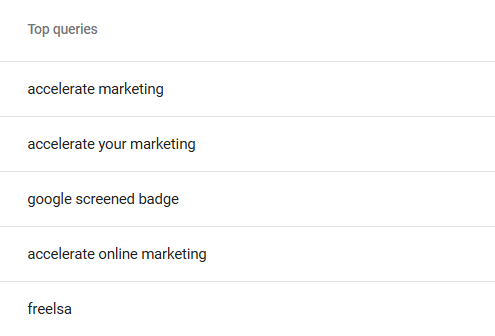
If Google Analytics tells you where your traffic comes from (region), Google Search Console (GSC) tells you how users are finding you online (search queries).
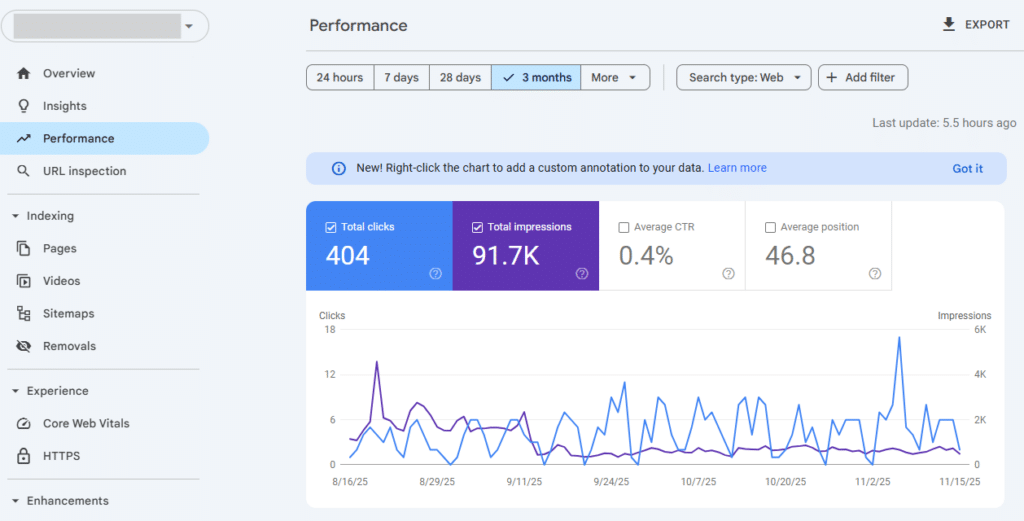
This official Google tool is essential for monitoring your organic search performance, revealing which local search terms you rank for, how often your pages appear in search results, and any technical issues that prevent Google from properly indexing your site.
3. Local Keyword Rankings
To truly gauge the success of your local SEO efforts, consistent tracking of your local keyword rankings is essential.
By using dedicated SEO platforms like SEMrush, Moz, or Ahrefs, you can monitor your visibility for business- and location-specific search terms.
This external data should be cross-referenced with the performance tab of your Google Business Profile, which shows actual search queries that drove traffic to your listing.
This combined approach allows you to identify growth opportunities and ensure your website is competitive in local search results.
4. Review and Reputation Monitoring
Customer reviews play a massive role in local SEO success. Not only do positive reviews boost your credibility with potential customers, but they are also a critical factor in local search rankings.
Reviews are important because search engine algorithms cannot enter the real world to verify your business’s quality or service.
Since Google can’t physically visit your office or watch your team work, it relies purely on digital trust signals.
These reviews act as the algorithm’s eyes and ears. High-quality, frequent, and detailed reviews signal to Google that your business is legitimate and active in the community. Without these signals, the algorithm has no “proof” of your real-world performance, making it far less likely to award you a top placement in local search results.
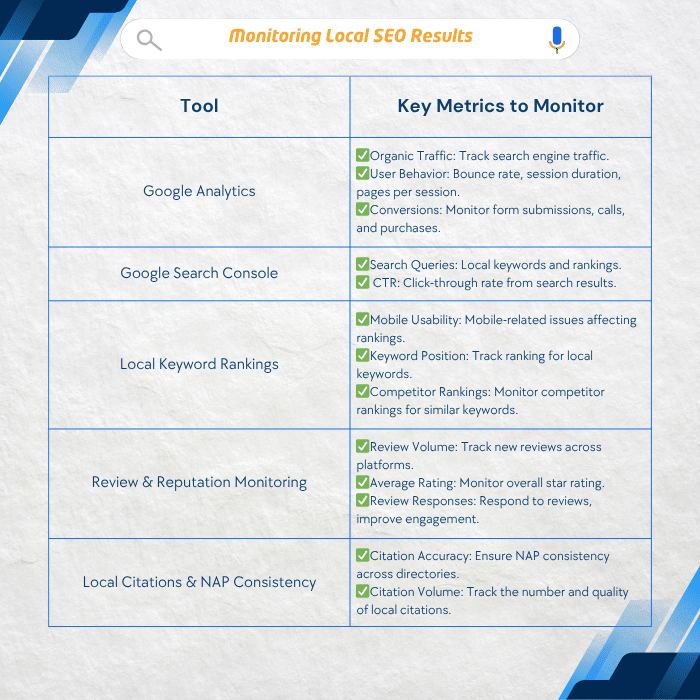
Need help figuring out which metrics to monitor? Here’s an example of which ones to track:
Complimenting Local SEO with Google Local Service Ads (LSA)
You may ask why we discuss a paid product like Local Services Ads (LSAs) in an in-depth guide about organic Local SEO.
The answer is simple: risk mitigation. Since LSA results appear above all other search listings (both organic results and standard paid ads) they will inevitably capture clicks that might otherwise go to your well-optimized organic listing.
Therefore, mastering Local SEO while leveraging LSA ensures comprehensive coverage of the search results. By appearing in the sponsored section, the Map Pack, and the organic results, you are creating multiple available touch points for the lead to land on your business, regardless of where they choose to click.
Take a look at our in-depth LSA blog to learn more about its availability and many other LSA tips and tricks.
Why LSA Can Be the Perfect Complement for Local SEO
These ads are a game-changer for high-intent queries because:
-
- Targeting High-Intent Users: LSA focuses exclusively on users who are ready to book a service now. Local SEO, conversely, helps with a broader spectrum of user journeys, from initial research (e.g., “how much does a roof cost?”) to less immediate purchasing decisions (e.g., “attorneys for drafting a will”).
- Targeting High-Intent Users: LSA focuses exclusively on users who are ready to book a service now. Local SEO, conversely, helps with a broader spectrum of user journeys, from initial research (e.g., “how much does a roof cost?”) to less immediate purchasing decisions (e.g., “attorneys for drafting a will”).
-
- Trust and credibility: The program has a badge showcasing that the platform has approved your business.
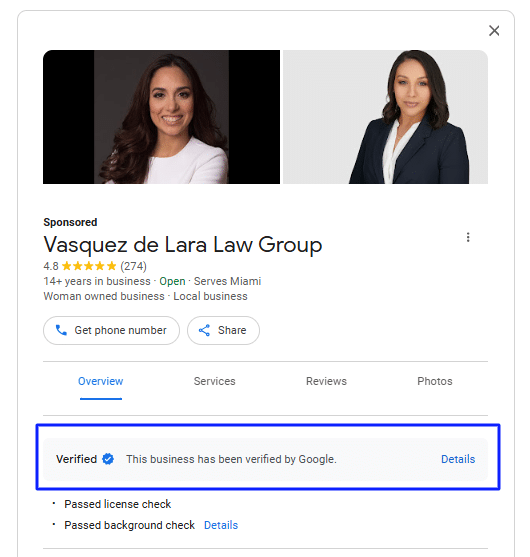
Please note that, since October 2025, Google has started consolidating all its verification credentials into one main badge: Google Verified. Head over to our article to learn more about Google’s new badge consolidation.
The 5 Most Common Local SEO Mistakes
Local SEO can significantly impact your business’s visibility and success, but it’s easy to make mistakes that could hurt your overall performance.
While we’ve touched upon issues like NAP and review inconsistency and technical SEO problems, other common local SEO pitfalls can derail your progress.
By proactively learning how to avoid these frequent errors, you can keep your strategy on track and maximize the impact of your SEO rankings and efforts.
❌ 1. Not Claiming or Optimizing Your Google Business Profile
Many businesses fail to claim their Google Business Profile or don’t take full advantage of the features available. Without an optimized GBP, you’re missing out on prime real estate in local search results.
✅ How to Avoid This Mistake:
-
-
- Claim and verify your GBP to gain control over how your business appears in search results.
- Update it regularly with accurate information, high-quality photos, and posts to keep it fresh and engaging.
- Claim and verify your GBP to gain control over how your business appears in search results.
-
❌ 2. Keyword Stuffing
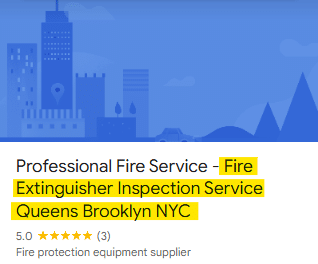
While local keywords are important for SEO, stuffing your content with too many keywords can harm your rankings. Keyword stuffing makes your content difficult to read and unnatural, which can lead to penalties from search engines.
Take a look at how this can happen on GBP:
✅ How to Avoid This Mistake:
-
-
- Focus on creating natural, valuable content that answers user questions and includes keywords in a meaningful way.
- Use long-tail keywords to better target local searches without overloading your content.
- Focus on creating natural, valuable content that answers user questions and includes keywords in a meaningful way.
-
❌ 3. Not Tracking Your Results
Local SEO requires ongoing monitoring and adjustment. If you’re not tracking your performance, you won’t know what’s working and what needs improvement.
✅ How to Avoid This Mistake:
-
-
- Use tools like Google Analytics, Google Search Console, and local SEO tracking tools to monitor your rankings, traffic, and conversion rates.
- Regularly review and analyze the data to adjust your strategy and improve results.
- Use tools like Google Analytics, Google Search Console, and local SEO tracking tools to monitor your rankings, traffic, and conversion rates.
-
❌ 4. Focusing Strictly on Keyword-Based Content
Focusing solely on hitting high-volume keywords and broad, generic topics, rather than creating truly useful, service-related content, can cause you to miss the opportunity to target high-intent local searchers.
This keyword-first approach results in mass-produced, unhelpful content that fails to address specific customer problems.
✅ How to Avoid This Mistake:
-
-
- Create location-based landing pages, blog posts, or news articles that speak directly to your local audience’s needs and showcase your expertise.
- Instead of just targeting “Plumber in [City],” create content that answers the exact questions your customers are asking, such as: “How Often Do I Actually Need to Visit the Dentist? (A Guide for Austin Residents)” or “5 Common Causes of Basement Leaks in Chicago (And How to Fix Them Before Winter)”.
- Crucially, while high-quality AI-generated content can certainly augment your efforts, always prioritize human oversight. Google has specifically started penalizing mass-produced, unhelpful content created solely for ranking, so your local content must consistently offer genuine expertise and unique value.
- Create location-based landing pages, blog posts, or news articles that speak directly to your local audience’s needs and showcase your expertise.
-
❌ 5. Operating an Outdated Website
A completely outdated website that hasn’t been upgraded in years is a massive roadblock to Local SEO success. Modern search algorithms heavily penalize sites that are slow, not mobile-responsive, lack current security protocols (SSL), or provide a poor user experience.
✅ How to Avoid This Mistake:
-
-
- Prioritize a mobile-first redesign to ensure your site loads quickly and functions perfectly on smartphones.
- Verify your site has an active SSL certificate (HTTPS) and that the design and navigation are easy for local customers to use and convert.
- Prioritize a mobile-first redesign to ensure your site loads quickly and functions perfectly on smartphones.
-
The Future of Local SEO: AI, Voice, and Context
To stay competitive, local businesses must embrace emerging technologies that are reshaping how customers search and interact. Adapting your strategy to these three key trends is essential for future success.
AI Answering Agents and Customer Engagement
AI and machine learning are rapidly transforming the customer journey. AI answering agents are revolutionizing the way businesses interact, enabling instantaneous responses to customer needs and fostering more meaningful, immediate engagement.
This improved interaction is key to strengthening customer retention and overall local visibility.
To leverage this trend, local businesses need cutting-edge solutions that feature Voice AI and Message AI capabilities, ensuring quick, efficient, and seamless integration with existing systems.
Want to see this technology in action? Visit our AI answering agent’s website to learn more about the power of our tool.
The Rise of Voice Search
Voice search is now a major factor in local SEO. As customers increasingly use virtual assistants like Siri and Google Assistant for complex, conversational questions, the old tactics of keyword stuffing simply don’t work anymore.
This is another critical reason why we previously emphasized avoiding keyword stuffing. People speak in full sentences rather than fragmented phrases; therefore, search engines prioritize content that sounds human.
Instead of forcing a single term repeatedly, you should focus on conversational, long-tail keywords. By answering specific questions naturally, just as you would explain them to a friend, you capture high-intent traffic from users who are ready to act, but use a more natural, spoken tone to find you
✔ Pro tip: Optimize your content using natural language and focus on question-based queries that mimic how people actually speak.
AI and Machine Learning in Search
Google’s AI-powered algorithms are getting smarter at understanding a user’s true intent and delivering contextually relevant results.
To satisfy this sophisticated search, businesses must focus on creating high-quality, authoritative content that is infused with proprietary data and unique insights from their own experience.
This level of originality is what the most advanced algorithms reward, ensuring your content comprehensively answers specific local search queries in a way no one else can.
FAQs
What is the best way to rank in the “3-Pack” on Google?
The best way to consistently rank in the local 3-pack is to master the key ranking pillars. This means fully optimizing your Google Business Profile with accurate details and local keywords, actively seeking and responding to reviews, and ensuring NAP consistency across all web citations; however, keep in mind that proximity to the user heavily influences the final results.
How long does it take to see results from Local SEO?
You can expect to see initial results and quick wins within 30–90 days, primarily through increased Google Business Profile views and immediate actions like phone calls and driving directions. However, consolidating a top position in the Google Local Pack and achieving dominance for highly competitive, high-value keywords typically takes 3–6 months or longer. The total timeline depends heavily on factors like your industry’s competition, your geographic location (city size), and the overall technical health of your website.
Is Local SEO different for multi-location businesses?
Yes, Local SEO for multi-location businesses requires a fundamentally different and customized approach. The key is to treat each branch as its own entity while maintaining brand consistency. Each location should have its own Google Business Profile, local keywords, and dedicated content for effective targeting.
Conclusion: Seize Your Local Opportunity
Local SEO is essential for businesses looking to stand out in today’s competitive digital landscape.
By taking your online presence to the next level with key strategies like Google Business Profile optimization, using local keywords, and leveraging advanced tools like Conversational AI, you can drive more traffic, increase customer engagement, and improve your rankings in local search results.
The future of Local SEO is rapidly evolving, and your competitors are embracing these advanced tools and strategies right now.
Staying ahead of the curve and continuously refining your strategy ensures your business remains visible and accessible to the customers who matter most.
Whether you’re just starting with it or looking to enhance your current efforts, the right approach can lead to sustainable growth and long-term success.
Ready for a Local SEO Breakthrough?
Implementing these advanced strategies is the fastest path to dominating your local market. If you are ready to streamline your optimization efforts and focus solely on business growth, partner with us to have the best SEO strategies for local businesses applied to your company
Book a discovery call today to learn more about our full range of services and see how we can help your local visibility truly soar!