In the dynamic world of digital marketing, Local SEO is often riddled with myths. Many businesses still struggle due to outdated beliefs, from misconceptions about the power of Google Business Profiles to misunderstandings surrounding reviews and citations.
It’s time to cut through the noise: in this article, we’ll break down five of the most common Local SEO myths and reveal what makes a significant difference in boosting your rankings and attracting more nearby customers ready to buy your products or services.
Dispelling 5 Common Local SEO Myths for Business Owners
Myth #1: “More Keywords in Your Google Business Profile Name Will Improve Your Ranking”
📌Myth Explanation: A common misconception is that including more keywords in your GBP name will help improve local search performance. Many businesses make the mistake of overstuffing their name with keywords like “Best Plumber in [City]” or “Affordable Landscaping Services [City].”
✅ The Truth: It’s a fact that having relevant keywords legitimately within your actual business name can indeed provide a ranking advantage on Google Business Profile.
However, the critical distinction lies in how those keywords get there. As one of our GBP experts emphasizes:
“An excessive number of keywords in the GBP is a violation of Google’s guidelines. The business can be suspended. It can hurt the ranking. So it is important that the name of the company appropriately reflects the actual organization or the business.”
👉 Our Actionable Tip: Always use your exact, real-world business name in your profile. If your business name is “Miami Shores Plumbing,” use it as registered, not “Miami Shores Plumbing – Best Emergency Plumbing Miami Beach.” To optimize for keywords, focus on other legitimate sections of your GBP:
- Primary and Secondary Categories: Choose the most accurate and relevant categories for your services.
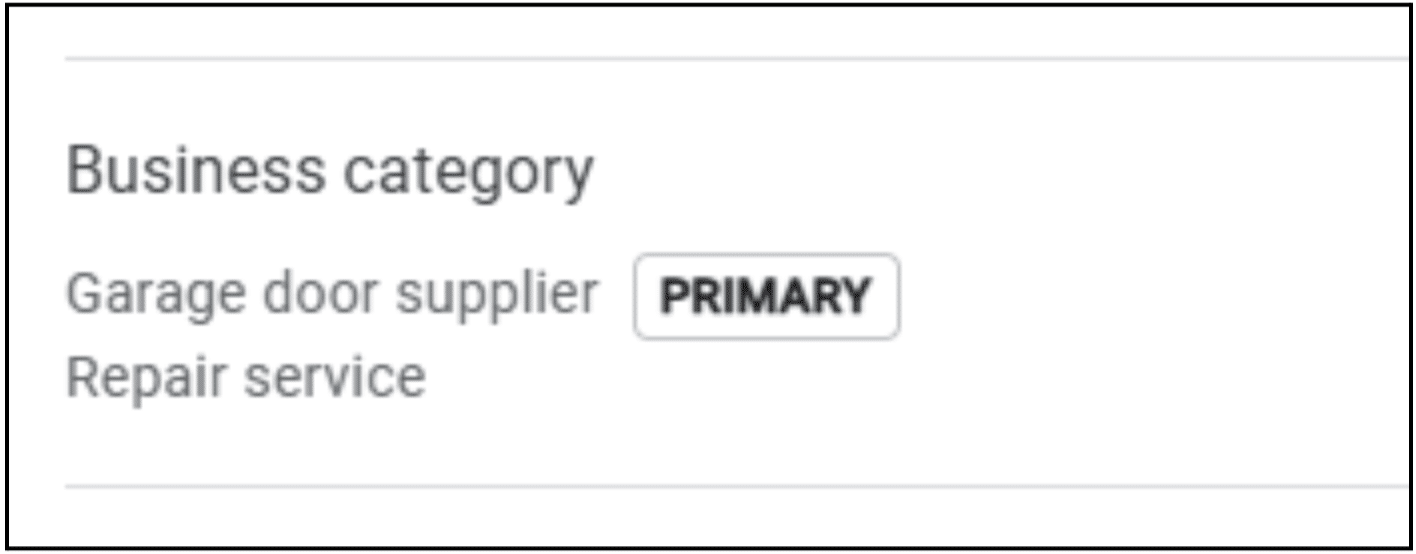
- Services Section: Detail all the services you offer, naturally incorporating keywords.
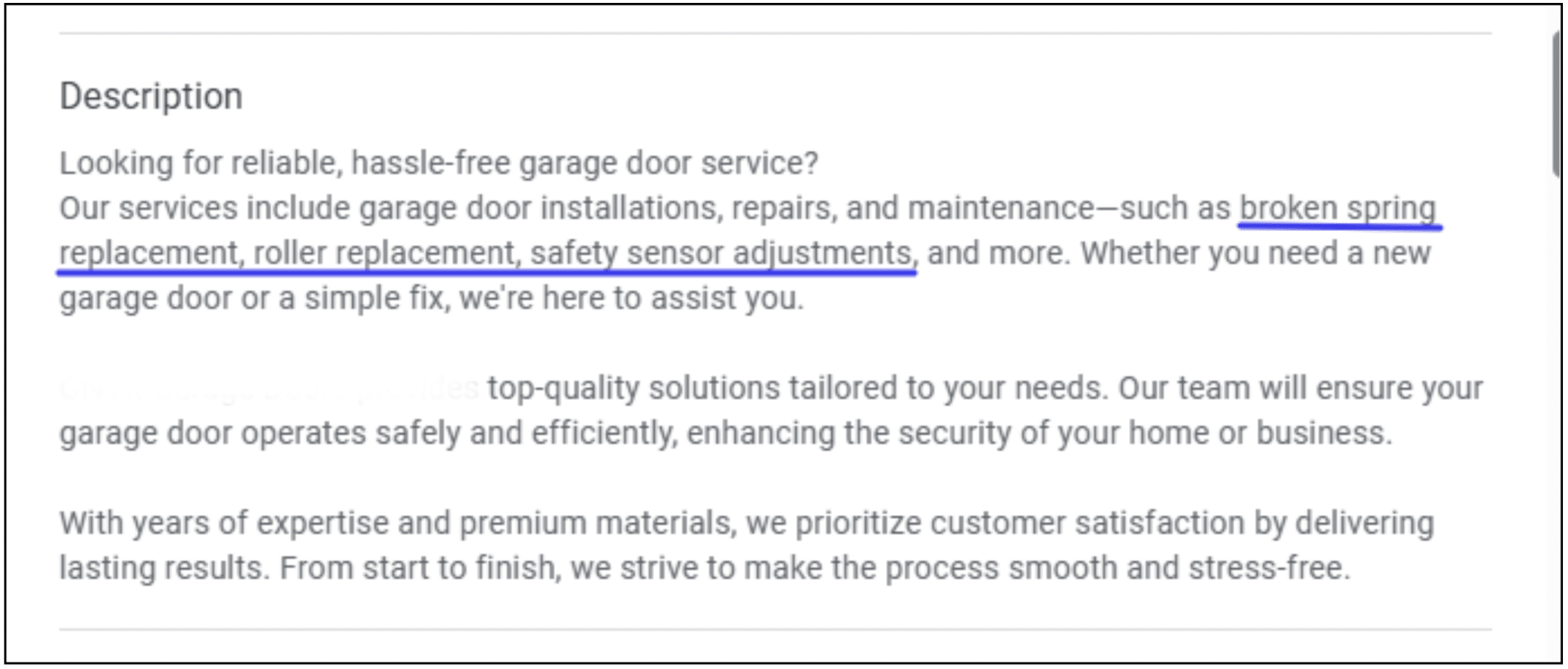
- Business Description: Write a compelling, keyword-rich description of what makes your business unique. Here is an example that highlights how you can do this:
- Google Posts: Share updates, promotions, and news using relevant keywords.
- Q&A Section: Answer common questions with helpful, keyword-inclusive responses.
By adhering to Google’s guidelines, you achieve one of the main goals for this practice: you protect your business from the risk of penalties or even suspension. Furthermore, it helps you build long-term trust and ensures your profile remains a powerful and legitimate tool for local search.
Myth #2: “Local Citations Are No Longer Important for Local SEO”
📌Myth Explanation: With the significant evolution of platforms like Google Business Profile and other direct-to-consumer features, a common question has surfaced among business owners: “Do directories still help local SEO?“
The belief is that mentions of your business name, address, and phone number (NAP) across third-party websites and online directories are outdated, or that their importance has faded significantly in the face of direct-to-business features and AI-powered search. But as we look to 2025 and beyond, this perspective couldn’t be further from the truth.
✅ The Truth: Our GBP experts provide clear insight on this:
“Local citations still matter in 2025 for local SEO. Consistent and accurate citations across relevant, high-authority directories can help validate your business information and improve local search visibility.”
Think of reputable local citations as foundational data points that feed into the vast knowledge base used by Large Language Models (LLMs) and AI-driven search features like Google’s AI Overviews (formerly known as Search Generative Experience), for example.
These advanced systems scour the web for accurate, verifiable information to answer user queries comprehensively.
When your business’s NAP details are consistently present and accurate across many high-quality, structured directories (like Yelp, industry-specific sites, or major data aggregators), it significantly increases the confidence AI models have in your business’s factual information.
👉 Our Actionable Tip: Make NAP (Name, address, phone number) consistency a priority. Furthermore, beyond just consistency, focus on acquiring citations from reputable, authoritative, and industry-specific directories (e.g., specialized legal directories for law firms, trusted medical directories for healthcare professionals).
These higher-quality, well-structured sources are exactly what AI models rely on for verified business information, making them key to getting cited by LLMs and featured in AI Overviews.
A robust and consistent citation profile builds immense credibility with both traditional search engines and emerging AI technologies.
Myth #3: “Online Reviews Don’t Matter as Much for Local SEO”
📌Myth Explanation: It’s a held belief that online reviews are primarily for managing your business’s reputation and customer perception with little direct impact on your actual local SEO rankings.
This perspective often leads business owners to underestimate the true power that positive and well-managed reviews hold in local search visibility. The thinking is, “My service is great, customers will find me through other means, and reviews are just a nice-to-have.”
✅ The Truth: Our team emphasizes just how vital reviews are:
“Though the quantity of reviews is important, the recency and engagement can make a real difference.”
This isn’t just about good customer service; it’s a core ranking signal.
Google’s algorithm prioritizes businesses that are active, reputable, and genuinely customer-focused. Reviews provide undeniable proof of this. In fact, according to BrightLocal’s Consumer Search Behavior study, 67% of customers look for reviews before making a purchase.
It’s not simply about having many reviews; Google’s algorithm considers several key factors:
- The sheer number of reviews (volume).
- Their recency (how new they are) – fresh reviews signal ongoing activity and relevance.
- The overall star rating (quality).
- The engagement you show (your thoughtful responses to reviews, both positive and negative).
Think of it this way: A business that consistently acquires a few new, genuine reviews each month will often significantly outrank another business that only gets a large batch of reviews once or twice a month, and then does nothing.
Google and customers prefer consistent, fresh signals of ongoing satisfaction and engagement over sporadic bursts of activity. This steady stream tells the search engine that your business is vibrant and continuously earning customer trust.
👉 Actionable Tip: Make it easy and encouraging for your satisfied customers to leave reviews on your Google Business Profile and other relevant platforms. Crucially, commit to responding to all feedback promptly and professionally, whether it’s positive or constructive criticism.
Myth #4: “Optimizing GBP is Enough for Local SEO Success”
📌 Myth Explanation: Many businesses believe that focusing solely on optimizing their GMB will automatically lead to complete SEO success.
This misconception often stems from the undeniable fact that Google’s products, especially GBP (which rose to prominence from earlier iterations like Google Places), dominate local search results.
Still, it’s important to remember that Local SEO actually existed long before GMB became the central tool it is today.
Its purpose has always been to make businesses visible in their local areas through a comprehensive set of strategies, not just one platform.
✅ The Truth: Our team strongly advises that a truly successful local SEO strategy goes beyond just your GBP. To genuinely stand out and capture the attention of your local audience, you need a comprehensive and multifaceted approach.
To truly thrive in local SEO, you need a well-rounded strategy that thoughtfully integrates:
- On-page local SEO: This involves optimizing your website with locally relevant keywords, creating dedicated pages for each service or location, and ensuring a fast and mobile-friendly experience.
- Local Link Building: Earning high-quality backlinks from other reputable local websites and organizations.
- Social Signals: Maintaining an active and engaged presence on relevant social media platforms.
- Review Management: Beyond just getting reviews, it’s about actively fostering, monitoring, and responding to them.
👉 Actionable Tip: Invest time and resources into creating valuable local content on your website, ensure your site is thoroughly optimized with relevant local keywords, and actively build high-quality local backlinks.
Myth #5: “You Must Have a Physical Presence in Every City You Want to Rank In”
📌 Myth Explanation: Having a verified physical location in a specific city indeed provides a tremendous advantage and strong proximity signals for ranking in that particular area.
However, this undeniable truth often leads to a widespread misconception: the belief that you must have a physical storefront or verifiable office in every single city you wish to rank for locally.
This myth frequently leads service providers and multi-location businesses to feel geographically restricted, thinking they cannot target nearby cities effectively unless they invest in opening new physical locations there.
✅ The Truth: While having a verified physical location in a specific city is undoubtedly advantageous, businesses can still effectively rank and attract clients in nearby cities by strategically optimizing their GMB‘s service areas.
The Accelerate team provides valuable clarity on this:
“Well, having a physical presence in a city can be advantageous. However, it is possible to rank in the areas surrounding the city by just optimizing the GBP service area.”
This means that while direct physical presence offers a strong, undeniable boost, businesses primarily can effectively communicate their reach to Google through service areas optimization on GBP.
👉 Actionable Tip: For businesses that operate primarily as service-area providers or serve multiple nearby cities without a physical storefront in each, focus on accurately setting your service areas to cover all regions you genuinely serve.
Crucially, reinforce your presence and relevance in these surrounding cities on your website. This means:
- Creating dedicated service pages or localized content that explicitly mentions the specific cities or neighborhoods you cater to.
- Naturally incorporating relevant city-specific keywords into your website content.
- Actively seeking local backlinks and citations from websites and directories within the target surrounding areas. This integrated, comprehensive approach effectively communicates your service reach to both Google and potential customers in those surrounding communities, helping you extend your local footprint even without a physical address in every single town.
Frequently Asked Questions
How long does it take to see results from Local SEO efforts?
Local SEO results typically start becoming noticeable within 3-6 months. However, this timeline significantly depends on the competitiveness of your market and specific city. For instance, trying to rank a finance firm in a highly competitive city like New York will generally take more time and consistent effort than ranking a local plumber in a less competitive area of Tennessee.
Factors like your industry and the current optimization level of your Google Business Profile also play a role. It’s important to stay consistent and continue refining your strategy to see long-term improvements in rankings and lead generation.
How do I track my Local SEO results?
Tracking Local SEO results is crucial for understanding how well your strategy is performing and identifying areas for improvement. Some key metrics to track include local rankings, website traffic, and conversion rates from local searches. Tools like Google Analytics, Google Search Console, and third-party rank trackers can help you monitor your progress.
For an in-depth guide on how to track Local SEO results and which tools are essential, check out our detailed blog post: 7 Local SEO Rank Tracking Tools You Should Keep on Your Radar.
How does the NAP (Name, Address, Phone Number) consistency affect local SEO?
NAP consistency is a critical factor for Local SEO. Google uses the consistency of your business name, address, and phone number across all online listings to verify your business’s credibility.
Discrepancies in your NAP details can confuse search engines and customers, negatively impacting your rankings. Ensure your NAP is consistent across all directories, your website, and your Google Business Profile.
How does mobile optimization affect my local SEO ranking?
Mobile optimization is now a truly critical factor for Local SEO, especially considering how people search today. The vast majority of online searches happen on smartphones. For instance, around 64% of all Google searches globally are now conducted on mobile devices.
Google uses mobile-first indexing, meaning the mobile version of your website is considered the primary version. A mobile-friendly website ensures a smooth user experience, improving your rankings and helping you stand out in local searches. Make sure your site loads quickly, is easy to navigate, and is fully optimized for mobile devices.
Can Local SEO help my business if I don’t have a physical storefront?
Yes, absolutely! Even if your business operates online or from a service area (without a physical storefront), Local SEO is still highly effective.
For example, consider creating location-based content on your website that focuses on the areas you serve. For instance, if you’re a plumber offering services in multiple towns, you can create individual pages or blog posts focused on each area, which will help improve your visibility in local search results.
Local SEO isn’t just for businesses with physical locations, it’s about ensuring your business is visible to the right audience, no matter where you operate from.
Conclusion
Understanding Local SEO is the key piece to successfully positioning your business exactly where your ideal customers are searching. As we’ve thoroughly explored, the journey to local search success isn’t just about applying strategies; it’s fundamentally about debunking common myths that can hinder your business’s progress.
By replacing misconceptions, such as keyword-stuffing your GMB name or underestimating the impact of positive reviews, with proven, practical approaches, you’re not just improving your visibility, you’re building a foundation for sustainable growth.
Remember, the vibrant world of Local SEO is a continuous process of learning and adapting, not a one-time setup.
To truly succeed and keep your business thriving in local searches, commit to consistent effort: always prioritize quality over shortcuts, stay genuinely engaged with your audience, and continuously refine your Google Business Profile and website. Embrace these truths, and watch your business shine in your local community.
Do You Need a Helping Hand with Your Business’s Online Visibility?
Navigating the world of Local SEO and truly connecting with your neighborhood customers can sometimes feel like a lot. Here at Accelerate Marketing, we’re not just a marketing agency; we’re local SEO experts genuinely excited to help businesses like yours shine online.
Whether you’re a cozy local spot or a growing multi-location business, we’re here with the tools and insights to help you achieve real, noticeable results. We specialize in making things simpler: from perfecting your Google Business Profile to helping you genuinely engage with customer reviews, and crafting amazing location-specific content that truly helps your business stand out.
Ready to explore your business’s true local potential? Let’s brainstorm what we can do together to attract more fantastic local customers and boost your search rankings!