How to Analyze Call Data to Improve Customer Service and Sales
Call tracking is a vital tool for businesses seeking to enhance customer service and sales performance. It involves using specialized platforms to capture and analyze data from every call your business receives, including call duration, source, outcomes (such as sales or consultations), and even agent performance.
By tracking this information, you can uncover key insights about what’s working and what’s not, ultimately helping you improve how you handle calls, convert leads, and engage with customers.
In this step-by-step guide, we’ll walk you through the process of analyzing call data using call tracking, showing you how to identify important metrics, organize your data, and turn insights into actionable strategies.
Whether you want to improve customer satisfaction, increase sales, or streamline your call handling, this guide will give you the tools you need to make data-driven decisions and achieve measurable improvements.
Mastering Call Data Analytics
Call data analytics is all about understanding the conversations your business is having with customers. By tracking key details from every call (like how long the call lasts, where it’s coming from, and what happens during the conversation), you can uncover valuable insights that help improve both your customer service and sales.
Businesses often use call tracking platforms like Callrail to record key data points, such as:
- Call duration.
- Call source (which campaign or channel drove the call).
- Caller ID and location.
- Peak call times.
- Seasonal or demand.
- Common complaints.
Think of it as a way to listen to what’s working, identify areas for improvement, and make smarter decisions that lead to better outcomes for both your team and your customers.
Why Analyzing Call Data Matters
Analyzing call data is more than just collecting numbers: it’s about gaining valuable insights that help improve both customer service and sales performance.
By understanding what happens during each call, you can identify areas of opportunity to optimize your team’s performance and drive better outcomes. Let’s take a look at its importance for customer service and sales.
For Customer Service
- Spotting Areas for Improvement: By reviewing call durations, hold times, and agent performance, you can quickly identify bottlenecks and areas where service can be enhanced. For instance, long hold times may indicate a need for more staff or better call routing.
- Boosting First Call Resolution (FCR): Call data lets you track how often issues are resolved on the first call. Identifying and addressing common obstacles can improve your FCR rate, leading to happier customers and fewer follow-up calls.
- Refine Communication Skills: Listening to call recordings gives you a direct look at how agents handle calls, their tone, and their level of empathy. These insights help you fine-tune scripts and coach agents to enhance customer satisfaction.
For Sales
- Identifying Buyer Intent: Tracking the source of each call (whether from paid campaigns, referrals, or organic search) helps you understand what drives your leads, so you can tailor your sales approach accordingly.
- Finding Missed Opportunities: Analyzing call outcomes helps uncover missed chances for conversion, whether it’s failing to upsell or not qualifying leads effectively. Spotting these gaps allows you to train your team for better results.
- Improving Conversion Rates: Call data allows you to track how well your team is converting calls into sales. By identifying successful call patterns, you can optimize your scripts and follow-up process to improve overall conversion rates.
Key Call Metrics You Should Track
Before we dive into how to track call metrics, it is important to learn what to track. These metrics help you understand performance, spot opportunities, and prioritize what will make the biggest impact.
Here are the core call metrics worth focusing on:
Key Call Metrics You Should Track
Customer Service Metrics:
- First Call Resolution (FCR): Measure how often issues are resolved during the first call.
- Customer Satisfaction (CSAT): Track overall satisfaction after each call.
- Average Handle Time (AHT): Track how long agents spend on calls.
- Hold Time: Monitor how long customers are on hold, aiming to minimize this.
- Transfer Rate: Track how often calls need to be transferred to another agent.
Sales Metrics:
- Call Conversion Rate: How often do calls result in a sale or appointment?
- Lead Capture Rate: Track how well your team captures lead information.
- Appointment Set Rate: How many calls result in scheduled appointments?
Operational Metrics:
- Missed Calls: Track the number of calls that were missed due to high volume.
- Abandonment Rate: Monitor how many customers hang up before speaking to an agent.
- After-Hours Call Volume: Track calls that come in outside of business hours to determine staffing needs.
Step-by-Step: How to Analyze Call Data
To get real value from your call data, it helps to follow a simple, structured approach. This keeps things organized and makes insights easier to spot.
Here’s a simple step-by-step guide to get you started:
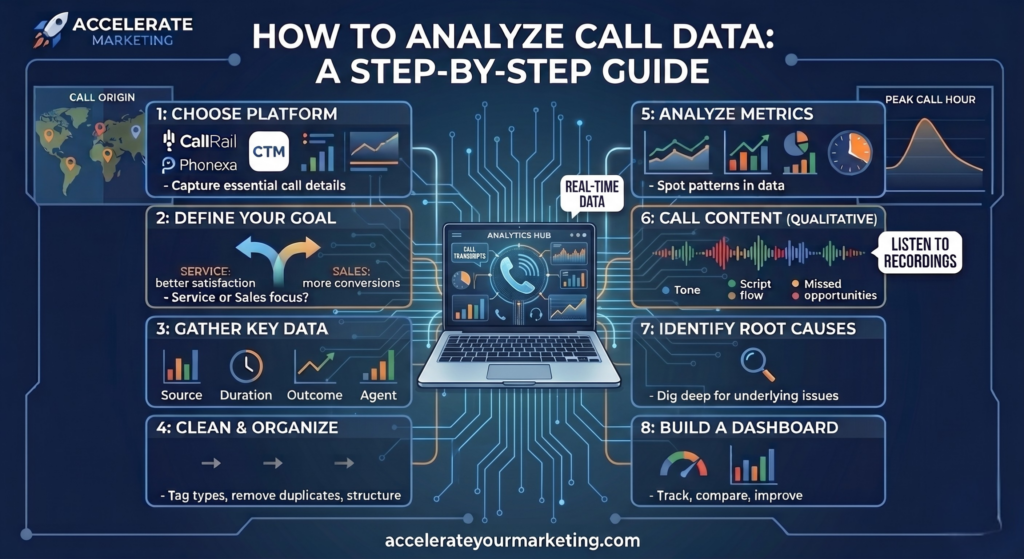
Step 1: Find a Reliable Call Tracking Platform
The first step in analyzing call data is to choose a platform that captures relevant information. Ensure your platform allows you to capture detailed data to facilitate accurate analysis. You can use platforms like CallRail, CallTrackingMetrics, or Phonexa.
Step 2: Define Your Goal (Customer Service? Sales?)
Before diving into the data, determine your goal:
- Are you looking to improve customer service (e.g., reducing call wait times, increasing customer satisfaction score)?
- Or are you focused on improving sales performance (e.g., increasing conversions, tracking lead quality)?
Knowing your objective will help you focus on the right metrics and, therefore, make better use of your call tracking work. Our detailed call tracking walk-through will help you understand more about this powerful business move, so make sure to check it out!
Step 3: Gather the Right Data
Use your call tracking platform to collect data on:
- Call source (where the call came from)
- Call duration (how long it lasted)
- Outcome (sale made, appointment scheduled, etc.)
- Agent performance (who handled the call and how well)
Step 4: Clean & Organize Your Data
Before you analyze anything, your data needs to be clean and organized. This step makes every insight that follows clearer and more accurate. Here are some tips on how you can do this task:
- Tag calls by type (sales, support, etc.) and categorize by outcome (successful sale, abandoned call, missed opportunity).
- Filter out duplicates and irrelevant data.
- Organize the data so it can be easily analyzed and referenced in the future.
Step 5: Analyze Quantitative Metrics
Quantitative metrics give you a clear picture of what’s really happening. They help you spot trends, catch problems early, and understand what’s working so you can make smarter decisions. Look for trends in your data, such as:
- Call duration patterns (Are longer calls leading to higher conversions?)
- Call outcomes based on call source (Which campaigns are generating the most sales?)
- Time of day (Are there peak hours for sales calls or service issues?)
Step 6: Analyze Call Content (Qualitative Insights)
Quantitative data tells you what happened, but qualitative insights help you understand why it happened. Listening to call recordings and reading transcriptions gives you valuable context. Listen to call recordings for:
- Tone of voice: Is the agent using an empathetic tone?
- Script flow: Is the conversation moving smoothly, or are there frequent pauses or awkward transitions?
- Missed opportunities: Did the agent fail to capture critical information or offer a solution that could have led to a sale?
Step 7: Identify Root Causes
Finding the root cause helps you go beyond the surface and understand why certain issues keep happening. Once you know what’s really going on, it’s much easier to make changes that truly stick. Look at your analysis and ask:
- Why are some calls leading to sales while others are not?
- Are there common themes in missed calls or dropped calls?
- Are there patterns in the agent performance that can be improved?
Step 8: Build a Reporting Dashboard
Most call tracking tools have ready-made dashboards you can customize. Create a visual dashboard that helps you:
- Track trends over time (e.g., peak hours, best-performing agents)
- Compare campaigns and agents to identify strengths and areas for improvement
Instant Engagement: How Conversational AI Transforms Call Handling
In today’s fast-paced business environment, speed is crucial when it comes to engaging with leads. Our AI-powered call answering system revolutionizes the way businesses respond to calls by providing instant AI-driven answers to phone and message inquiries, ensuring that no lead is left waiting.
With Conversational AI, your business can:
- Respond to inquiries in under 30 seconds: This fast response time improves lead capture rates by preventing potential customers from dropping off due to long wait times.
- Increase conversion rates: By answering calls quickly and effectively, our AI agent ensures that leads are engaged at the moment they show interest, increasing the likelihood of conversion.
- Capture key details automatically: Conversational.AI not only answers calls but also gathers important data, such as call source, lead intent, and customer needs, which is then logged into your system for easy follow-up.
- Provide consistent 24/7 support: With AI handling after-hours calls, you never miss an opportunity, allowing your business to engage with leads even when your team is offline.
With Conversational.AI, you can enhance your team’s efficiency, improve lead engagement, and create a seamless experience that keeps customers satisfied, no matter the time of day. Our AI agent is a game-changer for businesses looking to stay ahead of the competition. Want to learn more about this top-notch tool that can take your customer service to the next level? Make sure to book a call with us today!
Your Call Data Toolbox: Tools for Smarter Tracking and Insight
To make the most of your call data, you need the right tools to capture, organize, and analyze the important information.
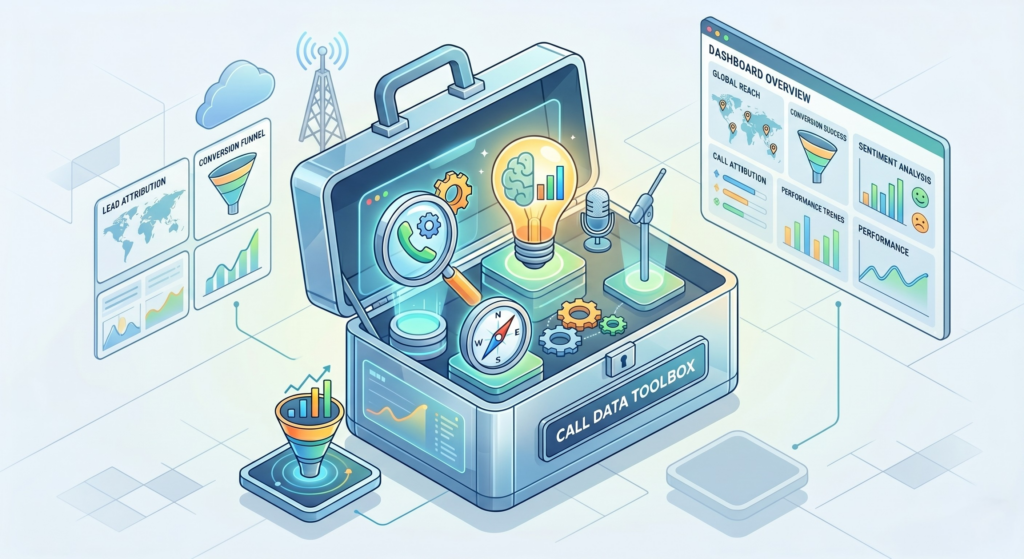
Here are some of the tools you can use:
1. Call Tracking Platforms
Traditional call tracking platforms can be the game-changer you need for this task. Furthermore, hiring services to make sure call tracking experts handle this task effectively can be an even better move.
Our agency offers top notch call tracking services through our trusted partner, CallRail. We use CallRail to help businesses track and analyze important call data.
With CallRail, we provide detailed reports and real-time analytics that allow businesses to optimize marketing strategies, increase conversions, and identify missed opportunities. It also helps track how effectively calls are being answered and which campaigns are driving the best leads.
2. CRM Systems & Call Tracking Integration
Integrating CallRail with your CRM system (e.g., HubSpot or Salesforce) lets you connect call data with customer profiles, giving you a more complete view of each interaction. This integration helps you:
- Track lead history across calls, emails, and other touchpoints.
- Understand lead behavior, from initial inquiry to conversion.
- Improve follow-up strategies, ensuring no leads are missed.
3. Other Call Analytics Tools
In addition to CallRail, other platforms like Twilio and RingCentral track:
- Call volume, time of day, and geographical location of calls.
- Customer sentiment (if integrated with voice analytics).
These platforms can further enhance your ability to track key metrics and make data-driven decisions.
Common Mistakes to Avoid
While analyzing call data, avoid these common pitfalls:
- Measuring too many metrics, instead of focusing on the key ones that drive actual results, leads to confusion and prevents you from seeing the “big picture” of your local growth. If you aren’t currently tracking data, start small.
- Ignoring qualitative data from call recordings.
- Not segmenting data by call types or team members.
- Not listening to call recordings to identify missed opportunities and team weaknesses.
Frequently Asked Questions
-
How often should I analyze call data?
Ideally, analyze call data monthly to spot trends. If there’s a sudden drop in performance, review it weekly or daily to address issues quickly.
-
What metrics are most important for improving sales?
Focus on call conversion rates, lead capture rates, and appointment set rates to track sales performance. Also, monitor speed to lead for quicker follow-ups.
-
How do I handle missed calls?
To minimize missed calls, ensure you have the right staffing during peak hours and implement AI-powered answering agents like Conversational AI. This ensures that even when your team is unavailable, leads are quickly engaged and not lost, leading to better conversion opportunities and enhanced customer experience.
-
What’s the difference between call tracking and call analytics?
Call tracking captures basic data like duration and outcomes, while call analytics analyzes call content, providing insights into agent performance and customer behavior.
-
How can call data help improve customer experience and sales outcomes?
Call data helps you understand customer interactions, which translates to allowing you to identify high-performing channels, optimize call handling, and refine sales strategies. Analyzing agent performance and call content also reveals areas for improvement, like script adjustments or faster response times. Ultimately, using call data to optimize your processes leads to more engaged customers, higher conversion rates, and a smoother sales funnel.
Final Thoughts
Analyzing call data is a powerful way to boost both customer service and sales performance. By focusing on the right metrics, utilizing the best tracking tools, and turning insights into action, you can optimize your processes, improve customer satisfaction, and increase conversions.
Consistently reviewing and refining your call data ensures you’re always in tune with customer needs and campaign performance.
Ready to Unlock Your Business Potential? If you’re ready to take action and drive growth by making data-driven decisions, partner with us to implement a strategy that’s tailored to your business needs.
Book a consultation today to discover how we can help you improve your processes, boost conversions, and achieve measurable results!