Want to know exactly which marketing efforts are driving calls in? At its core, call tracking is a system that meticulously attributes incoming phone calls to precise marketing and lead generation sources.
It’s like having a dedicated marketing analyst for your phone lines, a digital detective revealing the origin of each call and evaluating the effectiveness of your marketing initiatives.

By assigning unique phone numbers to distinct campaigns, you can pinpoint the channels that are driving the most valuable calls, leading to informed decisions and optimized budget allocation. This means smarter spending and a clear view of your marketing ROI.
Think of it as adding a layer of transparency to your marketing efforts, allowing you to see exactly where your customers are coming from and how they’re interacting with your business, and make decisions that fuel growth.
Call tracking isn’t a one-size-fits-all solution. To maximize its potential, you need to understand the different types available, each built to handle specific marketing challenges and data-gathering objectives.

Let’s delve into the core categories of call tracking and explore how they can be strategically applied to your business.
Dynamic Call Tracking (Website and Keyword-Level)
Dynamic call tracking is like having a smart switchboard on your website. Instead of showing one static number, it automatically swaps your business phone number depending on how a visitor found you.
Here’s how it works:
- Someone finds your site through Google Local Service Ads? They see one unique tracking number.
- Another person finds you through a regular Google search? They see a different number. This is called Dynamic Number Insertion (DNI) — and it’s the secret sauce for pinpointing exactly which campaigns and keywords are bringing in leads.
Beyond Just the First Click:
Dynamic call tracking doesn’t stop there. It also tracks what people do on your website before they call:
- Did they view your pricing page?
- Read a service description?
- Visit your contact page?
This behavioral data, combined with call data, gives you a full picture of your customers’ intent — not just that they called, but why they called.
Keyword-level call tracking
Going even deeper, you can use keyword-level call tracking. This lets you see which specific search terms in your ad campaigns are driving calls.
This level of precision is gold. It lets you see exactly which keywords turn into valuable calls, so you can spend your ad money smarter.
For example, if “emergency plumber” brings in lots of calls, you know it’s working. If “leaky faucet repair” doesn’t, you can tweak things.
While tracking keywords might sound complicated, the software usually handles the heavy lifting. You don’t need a million phone numbers; the system cleverly figures out which keywords led to each call.
It’s all about getting the right calls from the right searches, making your ad campaigns much more effective without a headache.
Offline Call Tracking
In a world dominated by digital clicks and scrolls, it’s easy to overlook the enduring power of offline marketing. Look at it this way: billboards that catch the eye during a commute, glossy magazine ads that linger on coffee tables, or the friendly voice on a local radio spot.
These traditional avenues still hold significant sway, especially for businesses with a strong local presence or those targeting specific demographics.
But here’s the million-dollar question: how do you quantify the impact of these physical campaigns? How do you know if that billboard is actually driving foot traffic or if that magazine ad is prompting phone calls?

That’s where offline call tracking steps in, shining a light on the world of traditional advertising. It’s about bridging the gap between the tangible and the measurable, allowing you to see precisely how your offline efforts translate into real-world results. The magic lies in assigning unique tracking numbers to each of your offline marketing initiatives.
Imagine a local restaurant placing an enticing ad in a popular community magazine. Each one, strategically scattered throughout the magazine, features a distinct tracking number. When a reader, drawn in by the mouthwatering food photos, dials that number, the establishment can directly attribute the call to that specific magazine ad.
While this means using different numbers for different offline campaigns, the key is that these numbers all forward to your main business line. You don’t need to manage multiple incoming calls on separate devices; the call tracking system handles the routing seamlessly.
You won’t have to juggle multiple devices or monitor a confusing array of incoming calls on separate phones: the call tracking system acts as an intelligent intermediary, capturing the valuable source data before the call is effortlessly routed to your existing phone system.
It’s business as usual for your team answering the phone, but behind the scenes, you’re gathering invaluable insights into which of your offline efforts are truly driving those crucial customer connections. This streamlined process ensures you gain the power of attribution without adding unnecessary complexity to your daily operations.
Furthermore, this direct attribution is a game-changer. You can calculate the ad’s ROI with precision, determining the number of calls generated per dollar spent.
However, the power of offline call tracking doesn’t stop there. Consider the versatility of QR codes. By embedding a unique tracking number within a QR code printed on your offline materials, you can seamlessly merge your physical advertising with a digital call to action.
When a potential customer scans the code with their smartphone, they’re instantly connected to a dedicated tracking number, allowing the agency to measure the effectiveness of that specific sign.
Offline call tracking provides invaluable insights into the effectiveness of your traditional marketing efforts, allowing you to optimize your spending, refine your strategies, and ultimately, drive more qualified leads to your business.
It’s about bringing the same level of data-driven precision to your offline campaigns that you’ve come to expect from your online initiatives.
Ready to put call tracking to work for your business? It might sound complex, but with the right approach, it’s a streamlined process that can deliver significant results. Here’s your step-by-step roadmap:
Choosing the Right Call Tracking Software:
Think of your call tracking software as the central nervous system of your call tracking strategy. It’s crucial to select a platform that aligns with your specific needs and goals. Consider these factors:
- Features: What are your must-haves? Do you need call recording, which lets you listen back to calls for quality control, training, and to understand customer needs better? Call routing, which are features that let you direct calls to the right team or person based on certain criteria (e.g., time of day, caller location)? Do you need it to connect with your CRM (like Salesforce or HubSpot), marketing automation platforms, and analytics tools (such as Google Analytics)? Make a list of your essential features before you start shopping.
- Integrations: Does the software integrate with your existing marketing tools, such as your CRM, marketing automation platform, and analytics dashboards? Seamless integrations will streamline your workflow and provide a more comprehensive view of your marketing performance.
- Scalability: Will the software grow with you? As your business expands, your call volume and tracking needs will evolve. Choose a platform that can handle your growth and provide the features you’ll need down the line.
- Pricing: Call tracking software comes in various pricing models. Evaluate your budget and select a plan that offers the necessary features at a price point that makes sense for your business.
To help you make an informed decision, here’s a comparison table of some popular call tracking software providers:

Our Recommendations Based on Business Size:
- Small Businesses (Startups, Solopreneurs): If you’re just starting out or have a smaller team, CallRail offers a great balance of features and ease of use without breaking the bank. Its intuitive interface and solid tracking capabilities make it an excellent entry point into call tracking.
- Medium-Sized Businesses (Growing Teams): As your marketing efforts expand, CallRail or CallTrackingMetrics are strong contenders. CallRail offers excellent scalability, while CallTrackingMetrics provides more advanced routing options that can be beneficial for larger teams.
- Large Businesses & Call Centers: For businesses with significant call volumes and complex routing needs, CallTrackingMetrics stands out with its call center-specific features. Twilio also offers immense scalability and customization for those with dedicated technical teams. RingCentral is a good option if you’re looking to integrate call tracking with a broader unified communications platform.
Important Notes on Pricing:
- The “Approximate Starting Cost” is a general guideline and can vary based on the specific plan, features selected, and call volume.
- “Pay-as-you-go” models like Twilio’s can be very cost-effective for low call volumes but can scale up depending on usage.
- Many providers offer free trials, which is highly recommended to test the platform before committing.
Remember to always check the latest pricing and feature sets directly with the software providers to make the most informed decision for your business.
Setting Up Call Tracking:
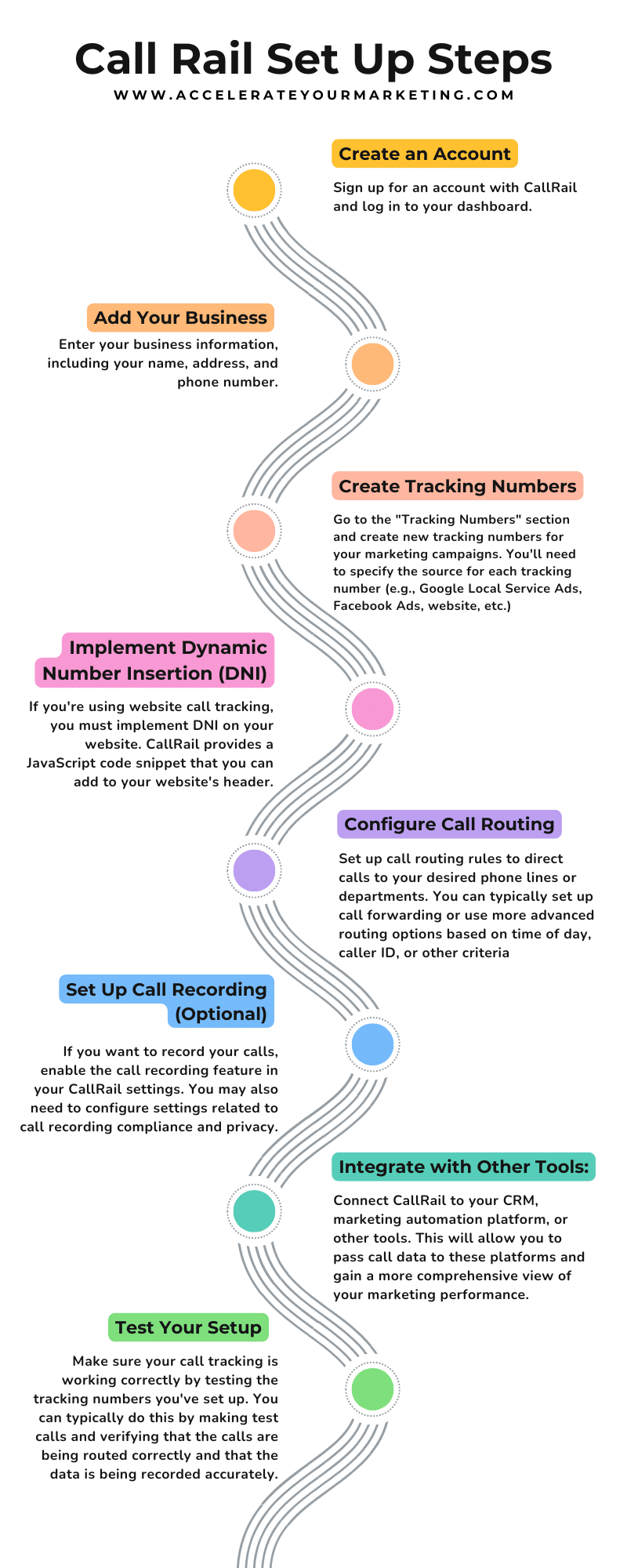
With your software in hand, it’s time to get your call tracking system up and running. This involves assigning tracking numbers to your marketing campaigns, configuring call routing to ensure calls reach the right people, and setting up call recording (if needed).
While the exact steps may vary depending on the software you choose, here’s a general overview of the setup process using CallRail as an example:
Tracking and Analyzing Call Data
Once your system is in place, the real work begins: tracking and analyzing the incoming call data.
This is where you’ll uncover the insights that drive better marketing decisions. You want to look for patterns, identify your top-performing campaigns, and pinpoint areas where you can improve.
Key metrics to keep an eye on:
- Call Volume: How many calls are you getting?
- Call Source: Where are those calls coming from?
- Call Duration: How long are people staying on the line?
- Call Conversion Rate: How many calls lead to sales or other desired actions?
- Call Outcome: What’s happening on those calls? (Use call recording and analysis to find out.)
Optimizing Marketing Campaigns Based on Call Data
This is where call tracking truly shines. Use the data you’ve collected to make smart changes to your marketing strategy.
- Example 1: If you find that calls from a specific Google Ads campaign are converting at a high rate, increase your budget for that campaign.
- Example 2: If you see that calls from social media are short and don’t lead to sales, you might need to adjust your social media messaging or targeting.
Compliance and Privacy
Don’t forget the legal side of things. Make sure your call tracking practices comply with all relevant laws and regulations. This is especially important for call recording. Obtain consent before recording calls and handle customer data responsibly.
Legal Guidance:
- TCPA (Telephone Consumer Protection Act): This US federal law restricts telemarketing calls and the use of automated dialing systems.
- GDPR (General Data Protection Regulation): This EU regulation governs the collection, use, and storage of personal data.

Here’s the technical overview: call tracking merges phone lines with intelligent software, providing a comprehensive view of your call data.
When a potential client calls a tracking number, the tracking system intercepts it, records the source, and routes it to your designated phone line— all without the caller noticing a thing.
Modern call tracking systems, predominantly cloud-based, offer significant advantages in terms of flexibility and scalability, adapting to your business’s evolving needs.
Furthermore, these platforms are designed to integrate seamlessly with various marketing tools, including Customer Relationship Management (CRM) systems, marketing automation platforms, and analytics dashboards.
Diving Deeper: The Technical Aspects of Call Tracking
To truly appreciate the power of call tracking, it’s essential to understand the underlying technology. Here’s a deeper dive:
- Call Routing: Call tracking uses clever routing to grab calls and send them where they need to go. Think call forwarding, but way smarter. More advanced systems may use Session Initiation Protocol (SIP) to route calls over the internet, offering greater flexibility and control.
- Data Collection and Storage: When a call is made to a tracking number, the system collects a wealth of data, including the caller’s phone number, the tracking number dialed, the date and time of the call, its duration, and its source. Everything stored securely in the cloud ready for you to analyze.
- Dynamic Number Insertion (DNI) Technology: DNI is a key technology for website call tracking. It dynamically displays different tracking numbers to website visitors based on their source, behavior, or other criteria. This is achieved through the use of JavaScript code that is placed on your website. When a visitor arrives on your site, the code identifies where someone came from (Google, social, etc.) and swaps in the right tracking number.
- Integration with Telecommunications Infrastructure: Call tracking systems need to fit right into your existing setup. This may involve working with your phone provider to implement call forwarding or using SIP trunking to connect your phone system to the call tracking platform.
Advanced Call Tracking Techniques
While basic call tracking gives you a solid foundation, these advanced techniques unlock a whole new level of power, transforming your phone lines into a strategic command center for lead management, streamlined communication, and deeper customer understanding. Let’s explore these sophisticated strategies:
Call Scoring and Lead Qualification
Imagine your sales team inundated with calls, struggling to discern which leads are truly promising. Call scoring and lead qualification offer a solution.
This technique assigns numerical scores to incoming calls based on predefined criteria, such as call duration, caller behavior, and keywords spoken. A longer call with specific, high-intent keywords might receive a higher score, indicating a more qualified lead.
This scoring system allows your sales team to prioritize their efforts, focusing on those prospects with the highest likelihood of conversion. For example, a real estate agency could assign higher scores to calls mentioning “luxury property” or “immediate purchase,” while a law firm might prioritize calls discussing “legal representation” or “personal injury lawyer.”
By streamlining the lead qualification process, call scoring maximizes sales efficiency and reduces wasted effort.
Call Routing and Automation
Forget guesswork. Call routing and automation techniques ensure that calls are directed to the appropriate department or individual without delay.
Imagine a customer calling a large service company. Based on their caller ID or the options they select in an IVR (Interactive Voice Response) system, the call can be automatically routed to the sales department, customer support, or technical assistance.
Furthermore, automation can be used to trigger specific actions based on call data. For example, a call from a high-value prospect could automatically trigger a notification to a sales manager, ensuring immediate follow-up. This level of automation streamlines communication, improves response times, and enhances the overall customer experience.
Call Recording and Transcription
Call recording and transcription offer a wealth of information beyond simple call attribution. By capturing audio recordings of customer conversations and transcribing them into text, you can uncover valuable insights into customer needs, preferences, and pain points.
Imagine analyzing call transcripts to identify recurring customer questions or concerns. This information can be used to improve your product documentation, refine your marketing messages, and train your customer service representatives. Moreover, call recording can be used for quality assurance purposes, ensuring that your team is adhering to best practices and providing excellent service.
Integration with CRM and Marketing Automation Platform
Integrating your call tracking system with your CRM and marketing automation platforms provides a holistic view of the customer journey. This integration allows you to track leads from their initial contact through to conversion, providing a comprehensive understanding of their interactions with your business.
Imagine a lead calling your business after clicking on a Facebook ad. With CRM integration, you can track this lead’s journey from the initial ad click, through their phone call, and ultimately to their purchase.
This level of visibility allows you to personalize your marketing messages and tailor your sales approach, resulting in higher conversion rates and increased customer loyalty.
Future Trends in Call Tracking
The future of call tracking is bright, with several exciting trends on the horizon:
AI and Machine Learning
AI and machine learning are transforming call tracking, enabling businesses to automate call analysis, identify trends, and personalize customer interactions. This includes features like automated call transcription, sentiment analysis, and predictive lead scoring.
AI-Powered Chatbots and Voice Assistants
The integration of AI-powered chatbots and voice assistants with call tracking systems is creating new opportunities for customer interaction and support.
Chatbots can handle initial inquiries, answer frequently asked questions, and even schedule appointments, freeing up human agents to focus on more complex issues.
Voice assistants can provide real-time support to agents during calls, offering information and guidance as needed, plus providing business owners with the opportunity to improve their call rate responses for LSA campaigns, for example.
At Accelerate Marketing, we understand the transformative power of AI in call tracking and customer communication. Our Conversational AI platform leverages cutting-edge AI to create more engaging and personalized voice experiences.
This technology goes beyond basic call routing and transcription, enabling businesses to have intelligent, natural-sounding conversations with their customers, gather valuable feedback, and automate key processes.
Integration with Omnichannel Marketing
Call tracking is becoming an integral part of omnichannel marketing, providing a unified view of the customer journey across multiple channels. This allows businesses to track all customer interactions, regardless of the channel, and create a seamless and personalized customer experience.
Enhanced Data Privacy and Security
As data privacy and security become increasingly important, call tracking providers are implementing robust security measures to protect customer data. This includes features like data encryption, access controls, and compliance with privacy regulations like GDPR and CCPA.
Frequently Asked Questions
What is the difference between call tracking and call recording?
It’s easy to confuse these two, but they serve different purposes. Call tracking is all about attribution: figuring out where your calls are coming from (e.g., a specific ad, a website page).
It uses unique phone numbers to pinpoint the source. Call recording, on the other hand, is exactly what it sounds like: capturing the audio of phone conversations. This is often used for training, quality control, or resolving disputes, but it’s a separate function from tracking where the calls originated.
Is call tracking only for large businesses?
No! While large businesses certainly benefit from call tracking, it’s a game-changer for businesses of all sizes. Small and medium-sized businesses (SMBs) can use it to optimize their marketing budget and attract more customers, focusing on what delivers the best results, which allow even smaller businesses to compete effectively in the digital marketplace.
How does call tracking help with local SEO?
Call tracking is a powerful ally for local SEO. It helps you measure the effectiveness of your local marketing efforts, such as your Google Business Profile or Local Service Ads, local directory listings, and more; by tracking calls from these sources, you gain valuable insights into what’s driving local customers to contact you, allowing you to fine-tune your local SEO strategy and attract more nearby business.

What are virtual phone numbers?
Virtual phone numbers are phone numbers that aren’t tied to a specific physical phone line. They exist in the cloud, allowing for flexibility and scalability. In call tracking, virtual phone numbers are used as tracking numbers, enabling you to route calls to your existing phone system while simultaneously gathering data about the call’s origin. They’re a key component of how call tracking works, providing the mechanism for attribution.
Are there any legal restrictions on call tracking?
This is crucial: there are definitely legal considerations with call tracking, especially regarding call recording. Laws vary by region and often require consent from all parties before recording a conversation. It’s imperative to familiarize yourself with the specific regulations in your area and ensure your call tracking practices are fully compliant.
Conclusion: Unlock the Power of Your Phone Lines
As we navigate the increasingly complex landscape of modern marketing, one thing remains constant: the power of the human voice. In a world of digital interactions, the phone call still holds a unique weight. It’s a moment of direct connection, a chance to build rapport, and a crucial opportunity to convert leads into loyal customers.
This is where call tracking emerges as a strategic imperative, not just a tactical tool. By implementing it and leveraging its advanced features, you can gain a competitive edge, optimize your marketing efforts, and drive business growth.
It’s not just about knowing who’s calling; it’s about understanding why they’re calling, deciphering the nuances of their needs, and using that knowledge to build stronger customer relationships.
Throughout this guide, we’ve explored the multifaceted benefits of call tracking, from its ability to pinpoint high-performing campaigns to its capacity to unlock invaluable customer insights.
Additionally, we’ve delved into the technical intricacies, the strategic implementations, and the advanced techniques that can transform your phone lines into a dynamic source of business intelligence.
Call tracking is an investment that pays dividends, transforming your phone lines from a simple communication tool into a strategic asset that fuels your business’s success. Invest in call tracking, explore its capabilities, and unlock the full potential of your phone lines.
Your customers are waiting to connect. Are you ready to listen? Contact us today to get the conversation going!