When Google transitioned Google My Business (GMB) to Google Business Profile (GBP), many business owners assumed it was just a rebranding. The legacy mobile app disappeared, the old dashboard was phased out, and the name changed. In reality, Google synced all of its local tools behind the scenes.
Your Google Business Profile is no longer just a passive map listing. Today, it serves as the foundational control center for your organic local rankings and directly powers your paid advertising via Local Services Ads (LSA).
Treating GBP as a modern operational hub rather than a simple directory listing is the new blueprint for local search dominance. To capitalize on this integration and protect your ad spend, you first need to know where your profile sits in Google’s current setup.
Managing Your Profile Today: Where Did Everything Go?
The first thing most business owners noticed during the transition was the removal of the standalone dashboard. Google moved profile management directly into the search engine results pages (known as SERPs) and the Google Maps interface.
To manage your profile today, simply ensure you are logged into your managing Google account and search for your exact business name or type “my business” directly into Google Search. This opens the New Merchant Experience (NMX) right in the search results.
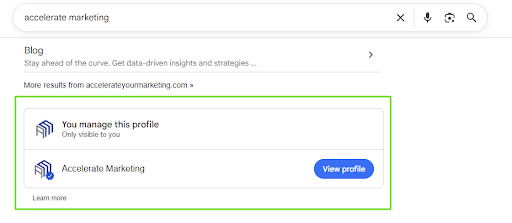
From this localized command center, you can edit your profile, read and reply to reviews, add photos, and check performance metrics without navigating to a separate backend platform.
Searching for individual profiles works well for single locations, but it quickly becomes a bottleneck for agencies or multi-location businesses. You can bypass the search interface and access the bulk location manager directly at business.google.com/locations, which will look like this.
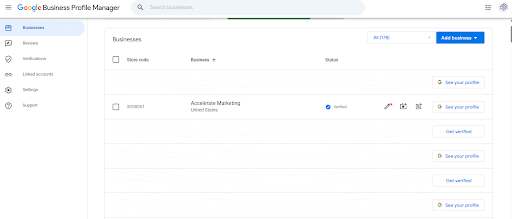
This backend view is still the most effective way to deploy bulk updates, adjust user permissions, and transfer ownership across your entire portfolio.
NOTE: Specific client details have been hidden for privacy. In your live dashboard view, each row represents an individual business profile or location.
The Verification & Re-Verification Reality
Google’s battle against spam has transformed how profiles get approved. The old days of waiting for a postcard in the mail are gone, replaced by mandatory video verification.
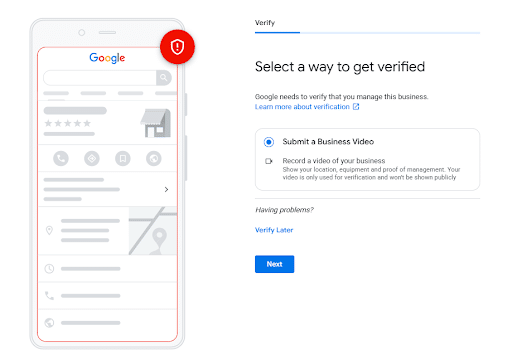
To verify your GBP, you must upload an unedited, unique, and complete video recording with no breaks that is at least 30 seconds long. You must capture the footage live; pre-recorded videos are not allowed, and you cannot record offline to upload later. Failing to follow these strict guidelines or missing even one of the following steps will result in an immediate verification failure:
- Business Location: You must capture surrounding street signs, building numbers, or nearby businesses.
- Business Operations: The video needs to show proof that your business exists. This can include your storefront and business signage for physical locations, or professional tools and equipment if you are a service-area business. Crucially, the business name shown in the video must match the exact name on your Business Profile.
- Proof of Management: You must demonstrate authorization by recording things only an employee can access, like unlocking the facility with keys, accessing restricted areas, or or unlocking a branded van.
Avoiding Technical Pitfalls
Given that the video must be captured in a single live take, proper preparation is essential. To avoid technical errors and maximize your chances of approval on the first attempt, follow these recommendations:
1. Practice your route beforehand: Plan what to show in your video in advance to ensure you seamlessly capture location markers, operational equipment, and proof of management in an uninterrupted shot.
2. Avoid restricted content: Ensure your video does not include sensitive information like bank accounts, tax numbers, ID numbers, or other people’s faces.
3. Prepare for upload glitches: In some cases, videos fail to upload on the first try. If you encounter this, simply attempt to upload it again.
Lastly, you need to be strategic when updating your profile. Changes to your business information, such as switching your primary category or updating your physical address, can easily trigger an unexpected re-verification request.
Making multiple edits at the same time increases this risk significantly, often freezing your listing until Google approves a new video.
A paused profile automatically cuts off your organic reach and disables your paid Local Services Ads until the issue is resolved. Protecting both of these lead sources is exactly why partnering with dedicated local search specialists is much safer than managing updates on your own.
Desktop vs. Mobile UX & Functional Nuances
While the core data remains the same, how you interact with your GBP changes depending on the device you use. Understanding the feature gap between desktop and mobile ensures you manage your presence efficiently.
Management Task | Desktop (Browser) | Mobile (Google Apps & Search App) |
|---|---|---|
Primary Use Case
| Strategic planning, bulk location management, and comprehensive profile setup.
| On-the-go engagement, live content capture, and mandatory verification.
|
Profile Verification
| Cannot be used for initial video verification.
| Required for recording and uploading the live verification video. |
Multi-Location Management
| Essential for agencies updating multiple properties simultaneously via the backend dashboard. | Inefficient for portfolio management; restricted to navigating one profile at a time via search. |
Customer Engagement
| Ideal for drafting detailed review responses and planning structured profile updates.
| Perfect for capturing real-time storefront photos and quickly replying to incoming customer messages.
|
The Strategic Bridge: How GBP Directly Powers Local Services Ads
Perhaps the most pivotal evolution in the current era of local search is the direct integration between your profile and Local Services Ads.
According to Google’s official affiliation guidelines, advertisers are strictly required to maintain a “public and verified Google Business Profile” to run these campaigns. By connecting these two platforms, Google transformed your free organic listing into the mandatory anchor for your paid lead generation.
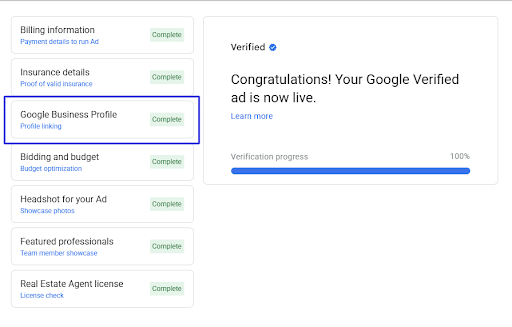
When you link your accounts, essential data flows automatically from your organic profile directly into your paid platform. In fact, certain core details are locked in the LSA interface and can only be updated through your Google Business Profile. These strictly auto-synced fields include:
- Business Name
- Address
- Location Type (e.g., whether you have a physical location for customers to visit)
Furthermore, because the systems are so tightly intertwined, structural changes carry immediate paid consequences. For example, updating your primary category on GBP can instantly pause your active LSA campaigns if the new category no longer matches your approved LSA job types.
In addition to acting as a structural anchor, your profile’s organic reviews directly fuel the ratings displayed alongside your Google Verified badge. The volume and quality of these reviews significantly impact your auction positioning and overall cost-per-lead.
Ultimately, keeping your organic data and your paid strategy perfectly synchronized is a non-negotiable requirement for protecting your revenue.
Advanced Operational Governance: Protecting Profile Integrity
Maintaining local market dominance requires proactive risk management. Implementing strong governance protocols protects listings from external disruptions, unauthorized edits, and policy flags.
1. Rejecting Unintended Edits
Google frequently updates profiles using data from web crawlers or user suggestions. Since these automated edits can alter core business details, managers must audit listings regularly and reject incorrect suggestions before they go live.
2. Restricting User Access Roles
Assigning excessive permissions creates security risks. To protect ownership controls, enforce a clear hierarchy:
- Owner: Reserved for leadership to handle user management and core profile settings.
- Manager: Granted to local staff or agencies to post updates, upload photos, and reply to reviews without user management access.
3. Managing Review Integrity
Unchecked fake or malicious reviews hurt both organic trust and paid LSA ad ranks. Reporting illegitimate reviews through Google’s review management portal protects your rating and keeps your conversion rates stable.
Frequently Asked Questions
-
What happens to my Local Services Ads if I hide my address on my Google Business Profile?
If you run a Service Area Business (SAB) without a physical storefront, Google requires you to hide your address. This will not negatively impact your LSAs. The system uses your hidden backend address for proximity calculations and relies on your defined service areas to deliver relevant leads.
-
How do holiday closures on my Google Business Profile impact my ad spend?
Operating hours directly control your local ad spend. Setting accurate holiday hours on your Google Business Profile prevents ads from running when your team cannot answer calls, protecting your LSA response rate and saving your budget. Connecting our Answering AI Agent ensures prospective clients receive instant engagement. By answering calls, qualifying prospects, and booking appointments automatically, it protects your response metrics while securing every paid lead.
Conclusion: Securing Your Local Visibility Blueprint
The shift to Google Business Profile was never just a name change. Today, your profile acts as a live data engine, serving as the single source of truth for both organic local pack rankings and paid Local Services Ads.
Treating your profile as a passive listing creates immediate revenue risk. Maintaining clean data, acting on live engagement signals, and aligning your organic and paid channels safeguards your budget against algorithmic disruptions.
Fine-tuning your geographic boundaries, auditing auto-synced data, and tracking proximity shifts makes the difference between wasted spend and consistent lead flow. Partnering with us takes the guesswork out of local ad coverage, giving you an optimized LSA and GBP strategy built on clean data and proven ROI.
Ready to eliminate hidden listing errors and dominate your market? Contact us to pinpoint your exact coverage gaps and start outranking the competition.